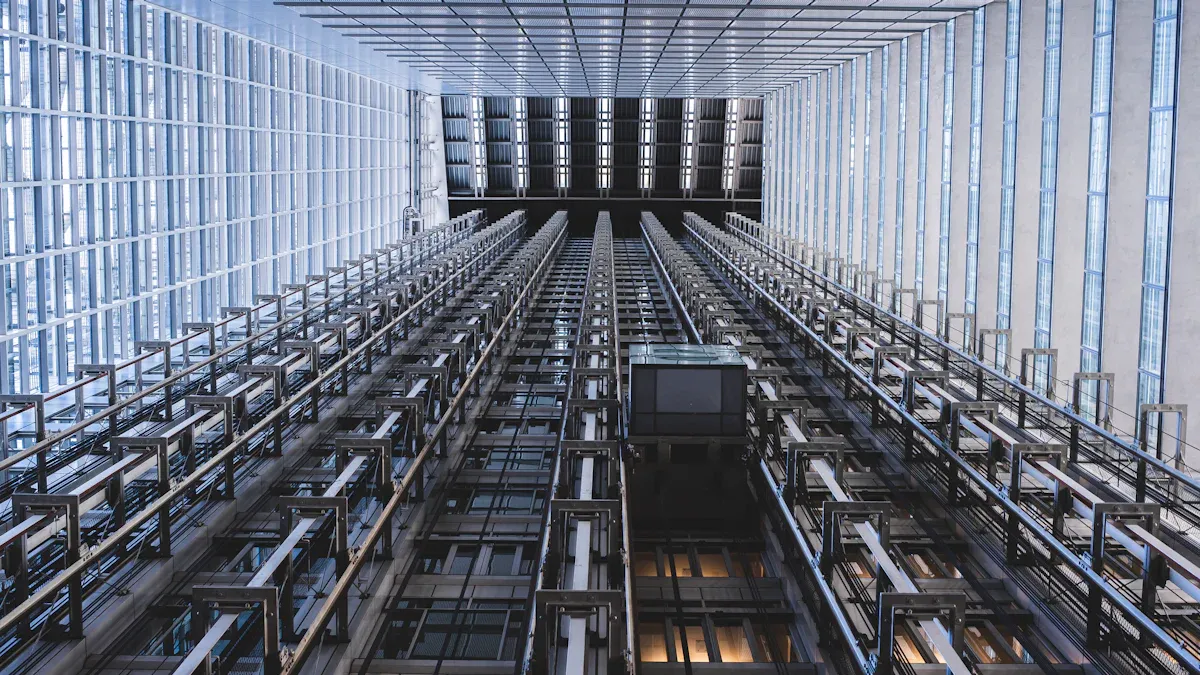
You probably notice many elevators if you live near tall, modern buildings. Taller buildings often need more elevators. Older buildings usually have fewer. > Knowing about many elevators helps you plan your day and even impacts your property’s value.
Key Takeaways
- Tall and modern buildings usually have many elevators to help people move quickly and easily.
- Newer buildings and certain styles often include more elevators to improve convenience and accessibility for everyone.
- Having many elevators reduces wait times, supports people with mobility needs, and can increase property value.
How to Judge If There Are Many Elevators Nearby
Building Height and Number of Floors
When you look at a building, the first thing you might notice is how tall it is. Tall buildings almost always need more elevators. If you see a building with many floors, you can guess it probably has many elevators to help people move up and down quickly. Office towers and hotels often have more elevators than apartment buildings because they handle more people at once.
Tip: The higher the building, the more elevators you will likely find inside. Local rules often require at least one elevator for buildings five stories or taller.
Here’s a quick table to help you understand the usual elevator-to-floor or unit ratios:
| Building Type | Elevator-to-Floor/Unit Ratio |
|---|---|
| Office Buildings | 1 elevator per 45,000 sq ft; floor-to-elevator ratio 2:1 or less |
| Apartment Buildings | 1 elevator per 90 units (general), 1 per 60 units in urban areas |
| Hotels | 1 elevator per 75 rooms or 1 elevator per 3 floors |
So, if you see a tall office building, you can expect many elevators. If you spot a large apartment complex, check how many units it has. More units usually mean more elevators.
Age and Style of Buildings
The age of a building tells you a lot about its elevators. Older buildings, especially those built before the 1980s, often have fewer elevators. Many old buildings were walk-ups, so you might not find any elevators at all if the building is under six stories. Newer buildings, especially those built in the last 20 years, usually have more elevators. Builders today think about accessibility and convenience, so they add more elevators to meet modern needs.
Modern architectural styles also give you clues. High-tech, brutalist, and contemporary buildings often show off their elevators as part of the design. These styles are common in high-rise towers and large complexes, which need many elevators to serve everyone.
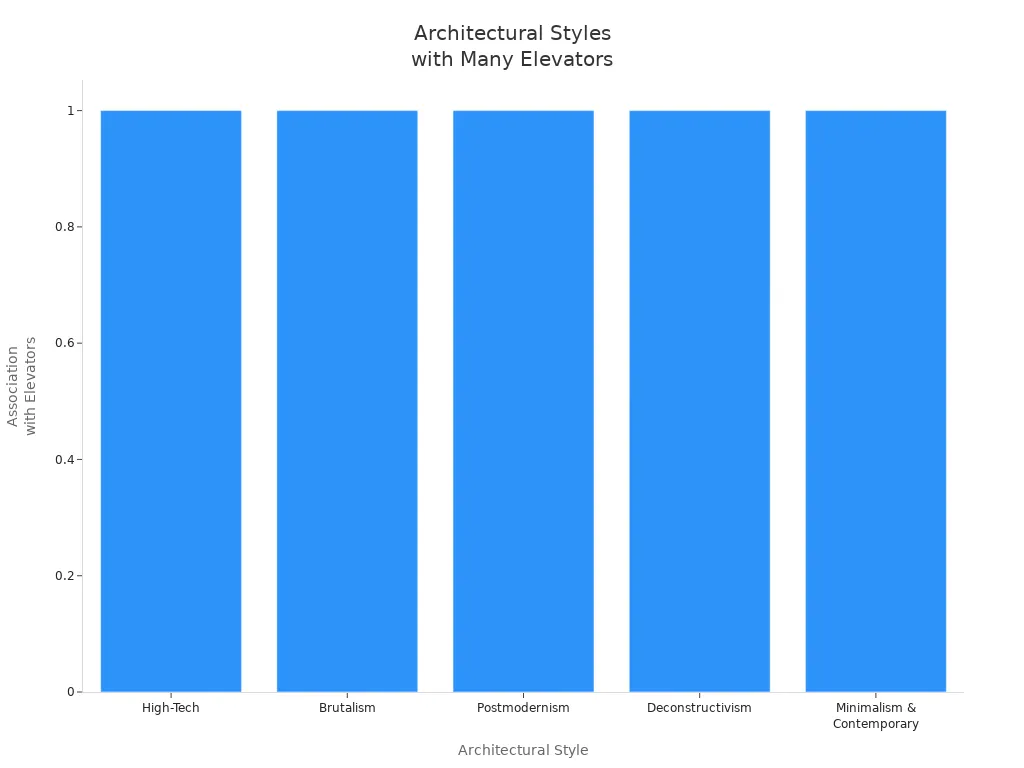
If you see a building with lots of glass, steel, or bold shapes, it probably has many elevators inside. These styles focus on making life easier for everyone, including people with mobility needs.
Visible Elevator Signs and Entrances
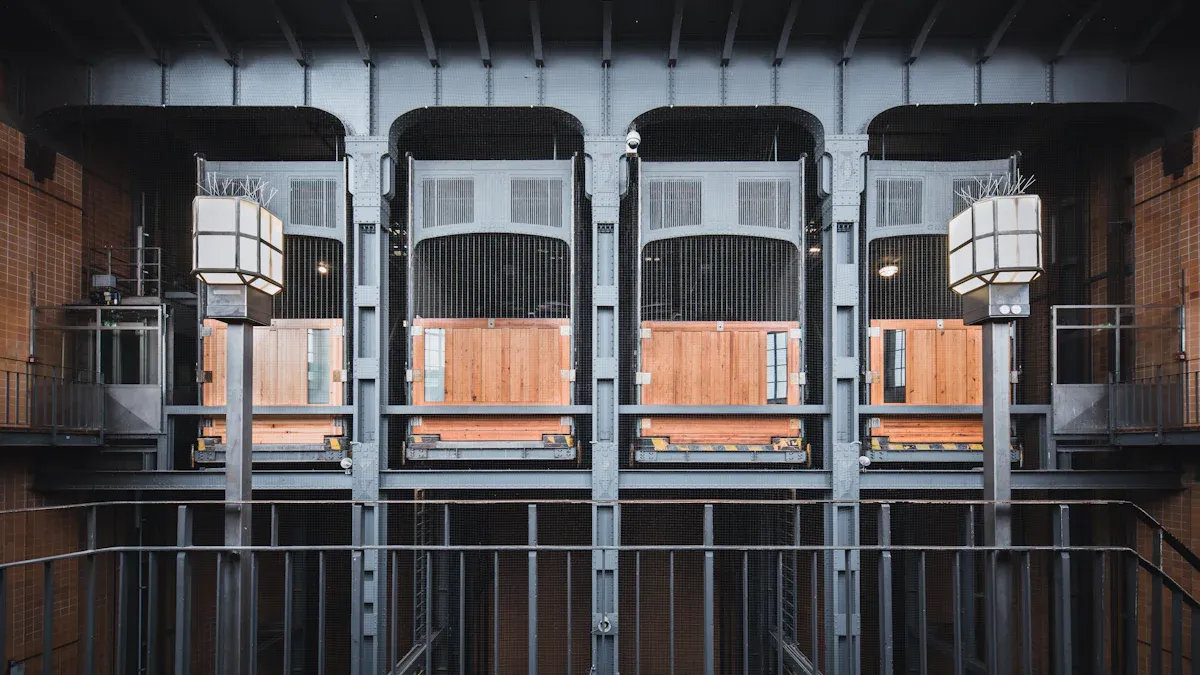
You can also spot many elevators by looking for signs and entrances. When you walk into a lobby, check for elevator doors. Large buildings often have several elevator entrances lined up together. Sometimes, you’ll see signs pointing to different elevator banks for different floors or sections.
Here’s a simple way to check for many elevators:
- Look for multiple elevator doors in the lobby.
- Notice if there are separate elevators for service or freight.
- Check for signs showing different elevator banks (like “Elevators A-D”).
- See if the building has special elevators for people with disabilities.
Note: Buildings with many elevators often have shorter waiting times and better access for everyone.
If you pay attention to these details, you can quickly judge if a building has many elevators. This helps you plan your day, especially if you want to avoid long waits or need easy access.
Which Buildings Have Many Elevators
High-Rise Residential Towers
When you look at a high-rise residential tower, you can almost always expect to find many elevators. These buildings often have dozens of floors and hundreds of apartments. To keep everyone moving smoothly, planners suggest about one elevator for every 50 to 60 flats. This means a tall tower with 300 apartments might have five or six elevators. High-rise towers also use faster and stronger elevators than mid-rise buildings. Check out this table to see the difference:
| Building Type | Elevator Model | Max Height Served | Load Capacity (kg) | Speed (m/s) |
|---|---|---|---|---|
| Mid-Rise | meta100 | ~110m | 1,150 | 2 |
| High-Rise | zeta300 | ~350m | 2,000 | 8 |
You will notice that high-rise towers need more powerful elevators because they serve more people and travel greater heights. So, if you live in or visit a tall residential building, you will likely see many elevators in the lobby.
Modern Office Buildings
Modern office buildings stand out for their need for many elevators. These buildings are usually tall and have lots of people coming and going, especially during rush hours. Office towers often have more elevators than mixed-use buildings because everyone arrives and leaves at similar times. You might see banks of elevators lined up together, each ready to take workers to different floors.
- Most office buildings use machine room-less (MRL) elevators for space and energy savings.
- Passenger elevators are standard, but you may also spot freight elevators in service areas.
- Elevator placement is usually central, near lobbies or stairwells, to help people move quickly.
Office buildings use smart systems to manage elevator traffic. These systems group people going to the same floor, which cuts down on wait times and energy use. If you work in a modern office, you probably enjoy the convenience of many elevators every day.
New Apartment Complexes
New apartment complexes also tend to have many elevators, especially if they have more than three stories. Building codes now require elevators in taller buildings and those with large floor areas. At least 5% of units must be accessible, so elevators are a must for people with mobility needs. Modern codes even require features like video and two-way communication for safety.
- Elevators must meet strict safety and accessibility standards.
- Local rules often require at least one elevator for every building with more than three stories.
- Larger complexes may have separate elevators for service or moving furniture.
If you are looking for a new apartment, check the building’s elevator setup. Many elevators mean shorter waits and easier access for everyone.
How Many Elevators Affect Daily Life and Property Value

Convenience and Waiting Times
You probably notice how elevators shape your daily routine, especially during busy hours. When a building has many elevators, you spend less time waiting. Elevator systems use smart controls to group people going to the same floor, which helps everyone move faster. During peak times, like mornings or lunch breaks, waiting can stretch up to seven minutes in buildings with too few elevators. Sometimes, taking the stairs feels quicker! Buildings with more elevators and smart systems keep waiting times short and make your day smoother.
Tip: Zoning elevators to serve certain floors can also cut down on wait times and crowding.
Accessibility for All Residents
Elevators make life easier for everyone, but they are especially important for people with mobility challenges. Less than 1% of homes are wheelchair accessible, so elevators fill a big gap. You can move heavy items, groceries, or strollers without worry. For seniors or people with disabilities, elevators mean safety and independence. Features like wide doors, Braille buttons, and voice controls help everyone use them comfortably.
- Independence: Move freely between floors.
- Safety: Avoid the risk of falling on stairs.
- Quality of Life: Stay in your home longer as you age.
- Modern Features: Enjoy smart controls and easy access.
Local laws require elevators in most tall buildings, and they must meet strict standards for size, door width, and safety features.
Impact on Property Prices
You might wonder if many elevators boost property value. In residential buildings, elevators can raise your home’s value by 10% to 25%. Buyers look for easy access and modern features, so elevators make your property stand out. They attract families, seniors, and anyone who wants comfort. In commercial buildings, elevators are essential, but they do not always raise rent or sale prices. Still, having enough elevators gives your building a competitive edge and keeps it appealing in the market.
You can spot elevator-rich buildings by checking lobby activity, elevator doors, and visible queues.
- Watch for smart systems or key card access.
- Notice busy times and how fast elevators arrive.
Quick checks like these help you judge convenience and property value in your area.
FAQ
How can you tell if a building has enough elevators?
Look for multiple elevator doors in the lobby. Notice if people wait a long time. More elevators usually mean shorter waits and easier access.
Do more elevators mean higher maintenance costs?
Yes, more elevators can increase maintenance costs. However, you get better convenience and safety. Property value often goes up, too.
Can you use the service elevator?
Sometimes you can use the service elevator, especially when moving large items. Ask the building staff first. Service elevators help keep passenger elevators less crowded.
Post time: Aug-05-2025