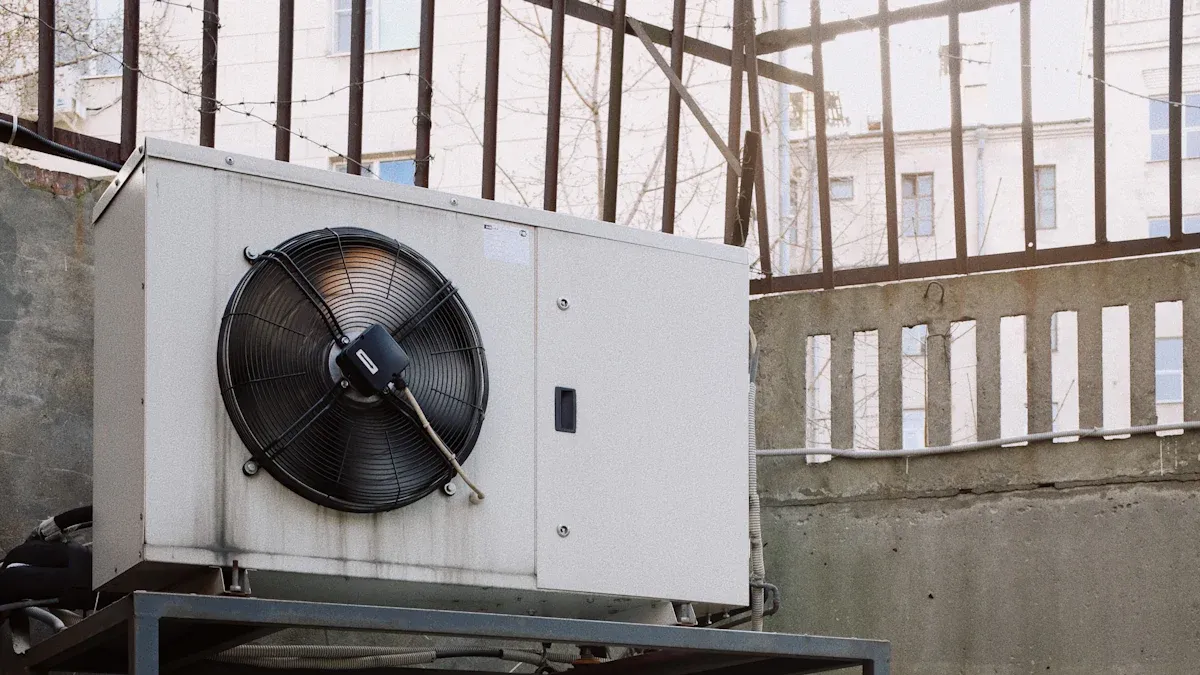
An Elevator; FUJI air conditioning system creates a comfortable environment for passengers. It handles the unique challenges of climate control within a confined, moving space, making it an essential elevator component. This system greatly enhances the overall experience of vertical transportation, ensuring a pleasant ride for everyone.
Key Takeaways
- Elevator air conditioning makes rides comfortable for people. It keeps the air fresh and cool inside the elevator.
- AC systems protect elevator parts from getting too hot. This helps the elevator last longer and work better.
- Installing AC in elevators makes buildings more appealing. It shows care for people’s comfort and health.
Why Your Elevator Needs Air Conditioning
Addressing Heat Buildup in Elevators
Elevators are small, enclosed spaces. They can quickly become very hot. Many factors contribute to this heat. Passengers generate body heat. The elevator’s mechanical and electrical systems also produce warmth. Sunlight shining into glass cabs adds more heat. Without proper cooling, the temperature inside an elevator can rise uncomfortably high. This makes the ride unpleasant for everyone.
Enhancing Passenger Comfort and Experience
High temperatures directly affect passenger comfort. People feel unhappy when an elevator is too hot. A study looked at temperature satisfaction in 351 office buildings. It included 52,980 occupants. The study found that 43% of these people were unhappy with the temperature. This shows that high temperatures often lead to dissatisfaction. Hot conditions also reduce productivity. Employees in Tokyo offices reported a 6.6% drop in productivity when temperatures increased. High school students in New York had 6.2% lower pass rates on 90°F days compared to 72°F days. This links higher temperatures to reduced performance and satisfaction. Thermal comfort means 80% of people are happy with the temperature. High temperatures make it impossible to achieve this comfort. An air conditioning system ensures a pleasant journey for all passengers.
Improving Air Quality and Circulation
Elevator cabs can trap stale air and contaminants. People inside an elevator release particles when they sneeze, cough, talk, or breathe. These particles contain germs and form aerosols. Aerosols follow airflow and can cause infection when inhaled. They build up in poorly ventilated elevators. Smaller virus particles stay in the air for a long time. Studies show viral spread in elevators is much higher than in open spaces. For example, COVID-19 transmission was 18.7 times greater. The ventilation system’s airflow pattern is very important. It helps dilute or remove these aerosols.
Common airborne contaminants in elevator cabs include bioaerosols. These are bacteria, viruses, and fungi. They spread infections like influenza and SARS-CoV-2. Pathogen droplets can stay in hospital elevator cabins for up to 18 minutes. New passengers might breathe in aerosols from previous riders. The SARS-CoV-2 virus stays active for up to 3 hours after becoming airborne. Its particles can travel farther than six feet. An Elevator; FUJI air conditioning system improves air quality. It circulates fresh air and filters out harmful particles. This creates a healthier environment for passengers.
Preventing Equipment Overheating
Elevator components are sensitive to heat. High temperatures can damage them. Elevator control systems and motors have specific temperature limits. The NEII Vertical Transportation Standard suggests 55°F to 80°F for machine rooms. NEMA sets a maximum temperature limit of 104°F for equipment. The National Electrical Code (NEC) uses 86°F as the standard for conductor ratings. Computer manufacturers recommend 60°F to 90°F for microprocessor controllers.
Traction and hydraulic elevator systems usually operate between 50–90°F (10–32°C). For hydraulic systems, stable temperatures are vital for oil thickness. Hydraulic oil degrades significantly above 140°F (60°C). Elevator equipment rooms generally need temperatures between 60°F and 90°F. Keeping the room below 90°F is usually enough. Overheating can lead to malfunctions and costly repairs. Air conditioning helps maintain optimal operating temperatures. This extends the lifespan of the elevator equipment.
How Elevator Air Conditioning Systems Work
Elevator air conditioning systems perform a vital function. They keep the cab cool and comfortable. These systems use principles similar to those found in home air conditioners. However, they also have special features for elevator environments.
Basic Principles of Refrigeration
Refrigeration is the core process. It moves heat from one place to another. An elevator AC unit uses a special fluid called refrigerant. This refrigerant changes between liquid and gas states. This change allows it to absorb and release heat.
The process begins when the refrigerant, as a cool, low-pressure gas, enters the evaporator coil. This coil sits inside the elevator cab. A fan blows warm air from the cab over the evaporator coil. The refrigerant absorbs heat from this warm air. As it absorbs heat, the refrigerant turns into a hot, low-pressure gas. The air, now cooled, returns to the elevator cab.
Next, the hot, low-pressure gas moves to the compressor. The compressor squeezes the gas. This increases its pressure and temperature. It becomes a hot, high-pressure gas. This hot gas then flows to the condenser coil. The condenser coil is usually outside the elevator cab or in a machine room. A fan blows ambient air over the condenser coil. The refrigerant releases its heat to this outside air. As it cools, the refrigerant changes back into a high-pressure liquid.
Finally, the high-pressure liquid refrigerant passes through an expansion valve. This valve reduces the refrigerant’s pressure. The sudden drop in pressure causes the liquid to cool down significantly. It becomes a cool, low-pressure liquid. This cool liquid then returns to the evaporator coil. The cycle repeats, continuously removing heat from the elevator cab.
Key Components of an Elevator AC Unit
An elevator air conditioning unit contains several essential parts. Each part plays a specific role in the cooling process.
- Compressor: This component acts as the heart of the system. It pumps the refrigerant. It increases the refrigerant’s pressure and temperature. This prepares the refrigerant to release heat.
- Condenser: The condenser coil releases heat from the refrigerant. It typically has fins and a fan. The fan helps dissipate heat into the surrounding environment.
- Expansion Valve (or Metering Device): This valve controls the flow of refrigerant. It reduces the pressure of the liquid refrigerant. This allows it to cool down before entering the evaporator.
- Evaporator: The evaporator coil absorbs heat from the elevator cab’s air. It contains the cold refrigerant. A fan blows cab air over this coil.
- Fans: AC units use fans for two main purposes. One fan blows air over the evaporator to cool the cab. Another fan blows air over the condenser to release heat outside.
- Control System: This system manages the unit’s operation. It includes thermostats and sensors. These components maintain the desired temperature inside the elevator.
Unique Considerations for Elevator Installation
Installing air conditioning in an elevator presents unique challenges. Engineers must consider several factors.
- Space Constraints: Elevator cabs are small. AC units must be compact. Manufacturers design units to fit in limited spaces, often on top of the cab or along its side.
- Vibration and Movement: Elevators constantly move. AC units must withstand vibrations and shocks. Manufacturers build them with robust designs and secure mounting.
- Power Supply: Elevators have specific electrical systems. AC units need a reliable power source. Technicians integrate the AC unit’s power into the elevator’s existing electrical supply.
- Condensate Drainage: The cooling process creates condensation (water). This water needs a safe place to go. Systems often use a condensate pump. This pump moves the water to a drain or a collection tank. Some advanced systems evaporate the condensate.
- Noise Levels: AC units can produce noise. Engineers design elevator AC systems to operate quietly. This ensures a peaceful ride for passengers. An Elevator; FUJI system often focuses on low-noise operation.
Air Distribution Within the Elevator Cab
Effective air distribution is crucial for comfort. The system must cool the entire cab evenly.
- Airflow Patterns: AC units typically have vents. These vents direct cool air into the cab. Engineers design airflow patterns to avoid direct drafts on passengers. They aim for gentle, widespread cooling.
- Return Air: The system draws warm air from the cab back into the AC unit. This air passes over the evaporator coil. This continuous circulation ensures consistent cooling.
- Ventilation: Some elevator AC systems also incorporate fresh air intake. This brings in outside air. It helps improve air quality inside the cab. Filters remove dust and pollutants from both recirculated and fresh air. This ensures passengers breathe clean, cool air.
Types of Elevator Air Conditioning Systems
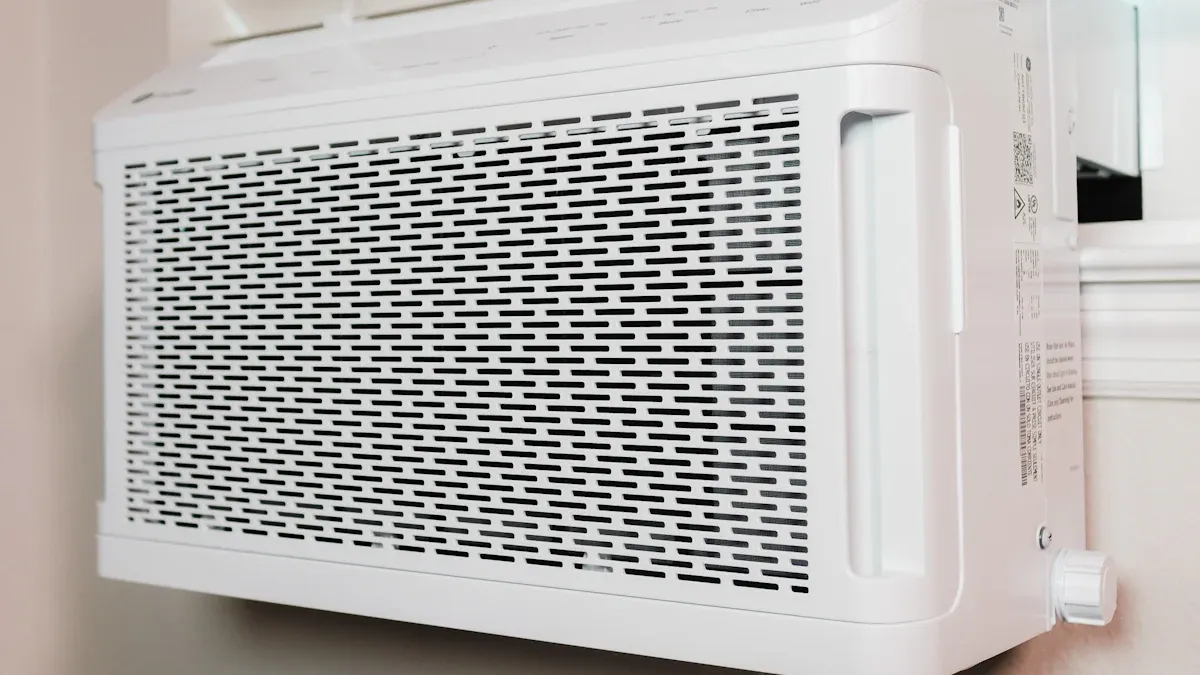
Elevator air conditioning systems come in various designs. Each type suits different building needs and elevator configurations. Building owners choose a system based on space, efficiency, and installation requirements.
Top-Mounted Elevator AC Units
These units sit directly on top of the elevator cab. They are a popular choice for existing elevators. Installation is often straightforward. Top-mounted units save valuable space inside the cab. However, they might add to the overall height of the elevator system. They typically use air to cool their condensers.
Side-Mounted Elevator AC Units
Side-mounted units attach to the side wall of the elevator cab. They work well for cabs with limited overhead space. These units can be less visible than top-mounted options. They might occupy a small amount of interior cab space. Like top-mounted units, they usually rely on air-cooled condensers.
Integrated Elevator AC Systems
Manufacturers build integrated systems directly into the elevator cab’s structure. They install these systems during the elevator’s construction. Integrated systems offer a seamless appearance. They often provide superior air distribution throughout the cab. These systems require careful planning during the initial elevator design phase.
Water-Cooled vs. Air-Cooled Systems
Air-cooled systems are the most common type. They release heat into the surrounding air. They are simpler to install because they do not need water lines. Water-cooled systems use water to remove heat. They connect to a building’s chilled water supply. These systems are often more efficient in very hot climates. They can also operate more quietly. An Elevator; FUJI system might offer both air-cooled and water-cooled options.
Benefits of Installing Elevator Air Conditioning
Increased Passenger Satisfaction and Retention
Elevator air conditioning significantly improves the passenger experience. People feel more comfortable in a cool, fresh environment. This comfort leads to higher satisfaction. Building occupants and visitors appreciate a pleasant ride. A comfortable elevator ride can also enhance a building’s reputation. It shows attention to detail and user well-being. Satisfied passengers are more likely to have a positive view of the building.
Improved Indoor Air Quality (IAQ)
Air conditioning systems play a crucial role in maintaining good indoor air quality (IAQ) inside elevators. They control CO2 levels, humidity, and particulate levels. These systems also reduce airborne contaminants. This includes dust, allergens, potential pathogens, microorganisms, volatile organic compounds (VOCs), and odors. Many modern systems integrate HEPA and MERV-13 filters. These filters capture particles as small as 0.3 microns. Some units also feature UV-C sterilization systems. These systems deactivate airborne microorganisms. Bipolar ionization technology can break down VOCs and neutralize odors. It also causes harmful particles to cluster for easier filtration. Elevators must maintain a minimum ventilation rate of 1.0 cubic feet per minute per square foot of cabin floor area under ASHRAE 62.1 standards. The maximum allowable CO2 concentration in occupied elevator cabins is 1,000 parts per million.
Reduced Risk of Equipment Malfunctions
Elevator components are sensitive to heat. High temperatures can cause them to overheat. This leads to malfunctions and reduces their lifespan. Air conditioning helps maintain stable operating temperatures. This protects sensitive electronics and mechanical parts. It ensures the elevator runs smoothly and reliably. This reduces the need for costly repairs.
Compliance with Building Comfort Standards
Building codes and comfort standards often specify environmental conditions. Air conditioning helps buildings meet these requirements. For example, systems help maintain dry bulb temperatures within comfort ranges. These ranges are specified in ANSI/ASHRAE Standard 55-2017. They also help keep relative humidity between 40% and 60%. This range can reduce the half-life decay time of viruses. An Elevator; FUJI system ensures compliance and provides a healthy environment. Building managers can also consider portable air cleaners with HEPA filters for vulnerable riders.
Installation and Design Considerations for Elevator AC
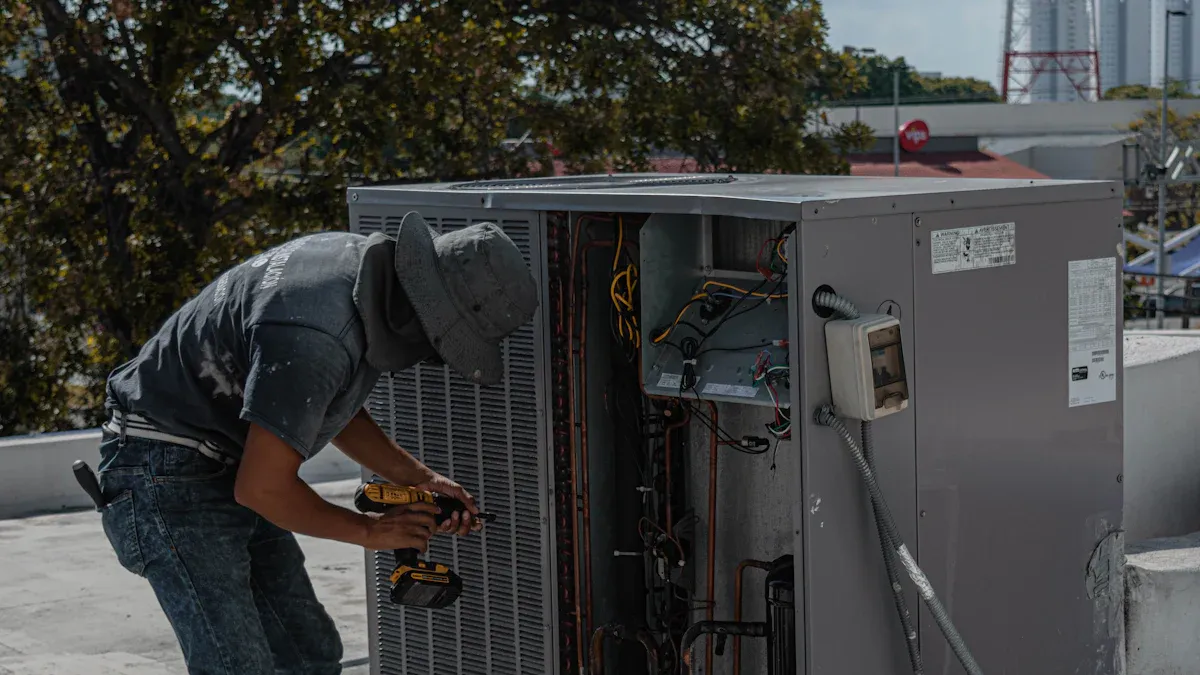
Installing an air conditioning system in an elevator requires careful planning. Building owners must consider several factors. These factors ensure the system works well and lasts a long time.
Space Availability and Structural Support
Elevator cabs have limited space. AC units must be compact. Installers often place units on top of the cab or along its side. The elevator structure must support the unit’s weight. Engineers check the cab’s strength before installation. This prevents any structural problems.
Power Requirements and Electrical Integration
Air conditioning units need a reliable power source. They connect to the elevator’s existing electrical system. Technicians ensure the elevator’s power supply can handle the added load. Proper electrical integration prevents power issues. This keeps the AC running smoothly.
Condensate Drainage Solutions
Air conditioning creates water. This water is called condensate. The system needs a way to remove this water. Installers often use a condensate pump. This pump moves the water to a drain. Some systems evaporate the water. This avoids the need for a drain line.
Noise Levels and Vibration Isolation
AC units should operate quietly. They should not disturb passengers. Experts recommend noise levels for electronic equipment stay below 45 decibels. HVAC systems typically produce a hum between 30 and 50 decibels. Installers check the manufacturer’s noise limits. Regular maintenance helps keep noise levels low. This includes checking insulation and filters. Elevator machinery needs vibration isolator pads. These pads are at least one-half inch thick. They reduce noise and vibration. This ensures a quiet and smooth ride.
Ventilation and Fresh Air Intake
Good ventilation is important for air quality. Some AC systems bring in fresh air from outside. This helps circulate air inside the cab. It also removes stale air. Filters clean the air before it enters the cab. This provides a healthier environment for passengers.
Maintenance and Energy Efficiency of Elevator AC
Proper maintenance ensures an elevator’s air conditioning system works efficiently. Regular checks also extend its lifespan. Building managers can save energy and money with good practices.
Routine Cleaning of Filters and Coils
Filters trap dust and debris. Dirty filters restrict airflow. This makes the AC unit work harder. Technicians should clean or replace filters regularly. They also clean evaporator and condenser coils. Clean coils transfer heat more effectively. This improves cooling performance and reduces energy use.
Refrigerant Checks and Leak Detection
Refrigerant is essential for cooling. Low refrigerant levels reduce efficiency. They can also indicate a leak. Professionals check refrigerant levels periodically. They also inspect for leaks. Repairing leaks quickly prevents further refrigerant loss. This maintains system performance.
Importance of Professional Servicing
Elevator AC systems are complex. They require specialized knowledge for maintenance. Professional technicians perform thorough inspections. They identify potential issues before they become major problems. Regular professional servicing ensures safe and efficient operation. It also helps comply with warranty requirements.
Energy-Saving Features (e.g., Inverter Technology)
Modern AC units include energy-saving features. Inverter technology is a prime example. Inverters adjust the compressor’s speed. This matches the exact cooling needs. This leads to optimal energy use. Inverter systems maintain consistent indoor temperatures. They prevent fluctuations and drafts. They also offer excellent humidity control. Variable speed operation allows for smooth and quiet performance. This reduces abrupt sounds. Continuous variable speed operation also reduces wear and tear on components. This leads to high durability and a longer system lifespan.
Tips for Optimizing Energy Consumption
Building owners can optimize AC energy consumption. They set appropriate temperature levels. They avoid overcooling the cab. Regular maintenance prevents energy waste. Ensuring proper insulation in the cab also helps. This keeps cool air inside.
FUJI Elevator Air Conditioning: A Reliable Choice
FUJI offers advanced air conditioning systems for elevators. These systems provide consistent comfort. They also ensure reliable operation. FUJI designs its units for the specific demands of vertical transportation.
Features and Advantages of FUJI Systems
FUJI systems incorporate modern technology. They often use inverter compressors. These compressors adjust their speed. This saves energy. It also maintains a steady temperature. FUJI units operate quietly. This enhances the passenger experience. They feature robust construction. This ensures a long service life. Many FUJI systems include advanced air filtration. This improves indoor air quality. An Elevator; FUJI system provides efficient cooling and heating. It offers precise temperature control.
Ensuring Comfort in Diverse Climates
FUJI designs its elevator AC units for various climates. They perform well in hot, humid regions. They also work effectively in cooler areas. The systems manage humidity levels. This prevents mold growth. It also keeps the air feeling fresh. FUJI units maintain a comfortable environment. They do this regardless of outside weather conditions. This makes them suitable for buildings worldwide.
Long-Term Performance and Durability
FUJI builds its air conditioning systems with high-quality materials. This ensures long-term performance. The units withstand constant use. They resist wear and tear. FUJI systems require minimal maintenance. This reduces operational costs. Their durable design means fewer breakdowns. This provides reliable service for many years.
Is an Elevator Air Conditioning System a Worthwhile Investment?
Factors Influencing the Decision
Building owners consider several factors. They decide if an elevator air conditioning system is a good investment. Local climate plays a big role. Hot, humid regions benefit most from AC. The type of building also matters. High-traffic commercial buildings often need AC more than low-rise residential ones. Budget constraints are important. Owners weigh the initial cost against long-term benefits. Passenger expectations also influence the decision. Modern tenants and visitors expect comfortable environments.
Long-Term Value for Building Owners
An elevator AC system offers significant long-term value. It protects elevator equipment from heat damage. This reduces maintenance costs and extends the lifespan of components. Efficient AC systems can also lower energy bills over time. They create a more stable environment inside the cab. This prevents costly repairs caused by overheating. Building owners see a return on investment through increased reliability and reduced operational expenses.
Enhancing Property Appeal and Functionality
Installing elevator AC greatly enhances a property’s appeal. Comfortable elevators make a positive first impression. This attracts and retains tenants in commercial buildings. It also improves the experience for residents in residential properties. Good air quality and comfortable temperatures increase overall building functionality. They show a commitment to occupant well-being. This can boost property value and marketability. A modern, comfortable elevator system becomes a key selling point.
- Elevator air conditioning systems are essential for modern buildings. They ensure passenger comfort and operational reliability.
- This system represents a crucial investment. It significantly enhances the passenger experience and extends equipment longevity.
- Proper selection, installation, and maintenance are key to maximizing these benefits.
FAQ
How does an elevator AC system keep passengers cool?
An elevator AC system uses refrigeration. It removes heat from the cab air. Then, it releases that heat outside. This process keeps the inside cool and comfortable for passengers.
How often do elevator AC units need maintenance?
Elevator AC units need regular maintenance. Technicians should check filters and refrigerant levels often. Professional servicing ensures efficient operation and a long lifespan for the unit.
Do elevator AC systems use a lot of electricity?
Modern elevator AC systems are energy-efficient. Many use inverter technology. This technology adjusts power use based on cooling needs. It helps save electricity compared to older models.
Post time: Oct-31-2025