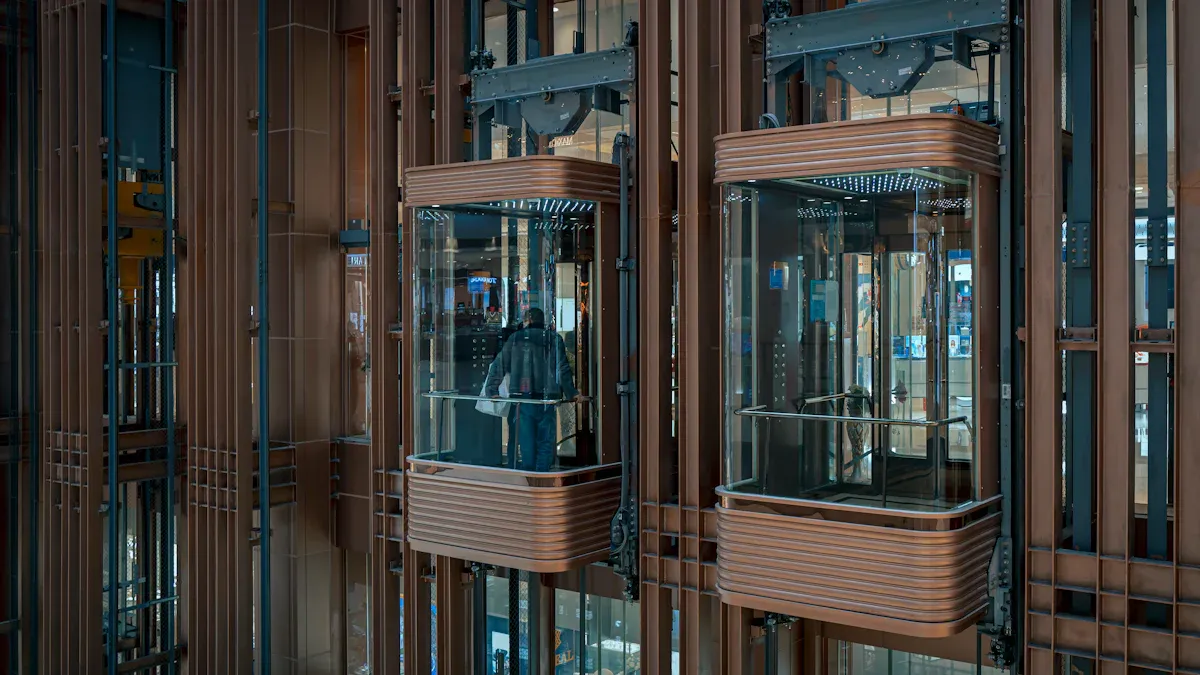
Elevators and lifts are crucial vertical transportation systems, classified by drive mechanisms like traction, hydraulic, and MRL, and by intended applications such as passenger or freight. The global elevator and lift market reached $117.58 billion in 2024, with projections for 2025 at $124.87 billion, showing robust growth. Understanding the core structure of an elevator, including the hoistway, car, and control system, is essential. This guide explores diverse elevator and lift types and their fundamental components.
Key Takeaways
- Elevators are classified by how they move, like using ropes (traction) or fluid (hydraulic), and by what they carry, such as people or goods.
- Every elevator has key parts: a shaft it moves in, a car for riders, and a control system that makes it work safely.
- Modern elevators use smart technology and energy-saving features to make rides smoother, faster, and more efficient.
Understanding Elevator and Lift Classification Systems
- Other Drive Systems:
- Rack & Pinion Elevators: These are self-ascending systems where a motor-mounted gear engages a rack of teeth to move the elevator car. They often serve maintenance access in towers.
- Pneumatic Vacuum Elevators: Driven by air pressure, these machine-room-less and pitless systems use a vacuum pump to create suction for upward movement. Controlled air release facilitates descent. They are typically for residential use.
The choice between hydraulic and traction systems depends on specific building requirements.
| Feature/Type | Hydraulic ElevatorsElevators and lifts are categorized based on several key characteristics. These classifications help define their operational principles, suitable applications, and technological sophistication. Understanding these systems provides insight into their design and function.
Classification by Drive System for ElevatorsElevator drive systems represent the core mechanism that powers vertical movement. Modern elevators primarily utilize several distinct drive technologies.
|
Traction Elevators |
|---|---|---|
| Mechanism | Uses a piston and hydraulic fluid to lift and lower the elevator car. | Uses ropes and sheaves (pulleys) to move the elevator car up and down. |
| Speed | Slower, typically up to 200 feet per minute. | Faster, can exceed 2,000 feet per minute. |
| Height Limit | Limited to about 60 feet (5-6 stories). | Can be used in very tall buildings (skyscrapers). |
| Energy Efficiency | Less energy-efficient, especially when going down. | More energy-efficient, especially with regenerative drives. |
| Cost | Generally less expensive to install for low-rise applications. | More expensive to install, but lower operating costs over time for high-rise. |
| Noise | Can be noisier due to the hydraulic pump. | Generally quieter. |
| Best Use | Low-rise buildings, freight elevators, and situations where speed is not critical. | Mid-rise to high-rise buildings, high-traffic environments, and where speed is essential. |
Classification by Intended Use for Elevators and Lifts
Elevators and lifts serve various purposes, leading to classifications based on their primary function.
- Passenger Elevators: These elevators transport people. They must comply with stringent safety regulations and accessibility standards. The Americans with Disabilities Act (ADA) ensures accessibility for individuals with mobility challenges. Passenger elevators must also adhere to the ASME A17.1 Safety Code for Elevators and Escalators. This code mandates specific design elements. For example, standard passenger elevators must be easily accessible from public areas. Their doors must open fully and remain open for at least three seconds. Obstruction sensors are required to reopen doors if blocked. Cabins must be at least 51 inches deep and 68 inches wide. Control panels must include Braille indicators, and audible signals must indicate floor stops. A two-way intercom for visually and hearing-impaired riders is mandatory.
- Freight Elevators: These elevators are designed to transport goods and heavy loads. They typically have robust construction and larger capacities than passenger elevators. Freight elevators commonly handle loads between 2,000 and 20,000 pounds. Industrial freight elevators often surpass 20,000 pounds, accommodating substantial weights for warehouses and industrial settings.
- Service Elevators: Service elevators often combine features of both passenger and freight elevators. They transport staff, goods, and sometimes passengers. These elevators must also comply with ADA standards if passengers use them.
- Limited-Use/Limited-Application (LULA) Elevators: LULA elevators are specialized lifts with strict regulations regarding size, capacity, and standards. They serve specific needs, often in smaller commercial buildings or as accessibility solutions.
- Private Residence Elevators: These are designed for single-family homes. They have specific safety requirements under ASME A17.1, distinct from commercial passenger elevators.
Classification by Control System for Elevators
Elevator control systems manage the movement and efficiency of elevator cars within a building. These systems range from basic access control to advanced smart technologies.
- Single Elevator Access Control: This system manages a single elevator, typically in smaller buildings with fewer floors. It allows for setting specific usage times and restricting stops on certain floors. Riders often use access cards to activate the elevator. Cloud-based access control can integrate with these systems for credential management.
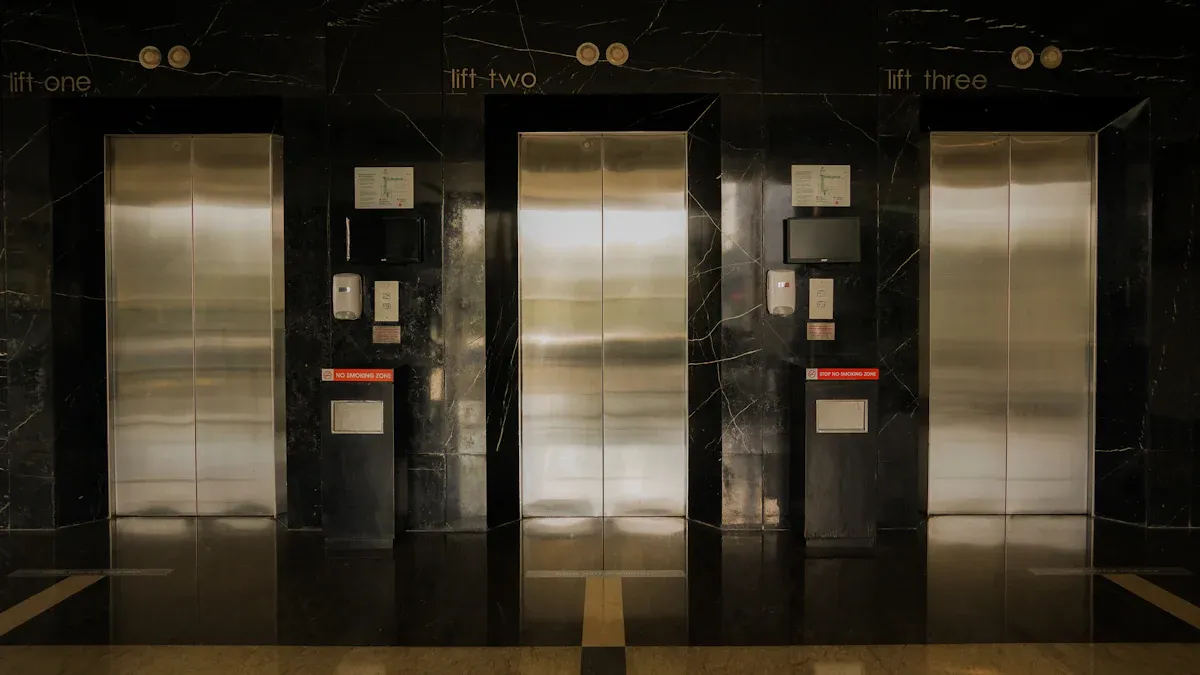
- Elevator Banks: Larger buildings utilize elevator banks, which consist of multiple elevator cabs. These systems transport many people simultaneously. In high-rise and commercial buildings, they can restrict tenant access to specific floors. Elevator banks often divide a building into zones, with specific elevators serving particular floor groupings.
- Smart Elevators (Destination Dispatch Systems – DDS): These modern access control systems are increasingly popular in new multi-tenant buildings, especially those with 10 or more floors. They replace traditional call buttons with digital touchscreens in the lobby. Riders input their destination before entering the cab. The system then groups passengers going to the same floor and assigns the most efficient elevator car. This eliminates traditional up/down buttons and often internal cab buttons.
An evaluation of elevator motion dynamics reveals that when an elevator stops for contiguous floors or nearly contiguous floors, it spends less time in acceleration and deceleration states that if it were making the same number of stops separated by a large number of floors. Therefore, elevators spend less time cycling between the lobby and floors above. This reduces round-trip time, allows more round trips, and, ultimately, increases the all-important elevator handling capacity.
Smart elevators significantly improve efficiency. They minimize the number of stops and reduce car crowding. This decreases wait time and time to destination. They increase handling capacity by loading passengers according to their destination rather than random arrival. Zoned destination dispatching further enhances efficiency by assigning elevators to specific floor groupings. This improves the management of peak traffic times. Smart systems also reduce energy usage by employing heavy and light traffic algorithms. They group floors to minimize energy consumption and avoid energy waste by matching resources to demand.
Post time: Dec-19-2025