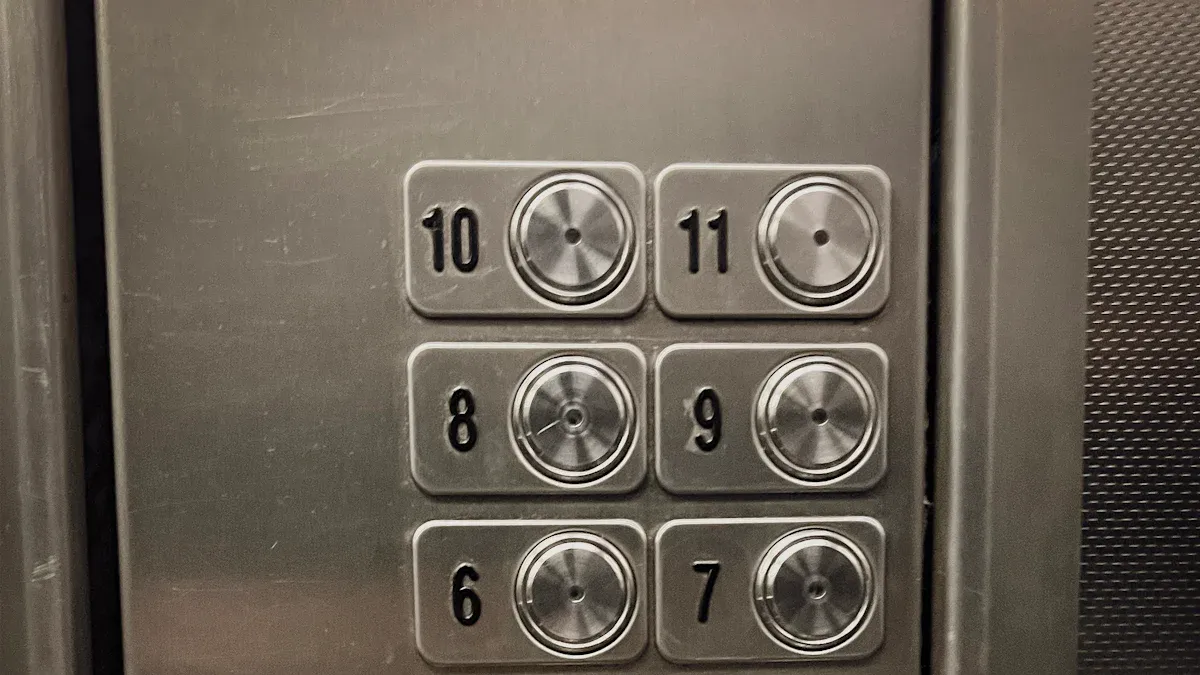
Modern infrastructure demands proactive safety measures. This ensures daily operational continuity and protects users. A forward-looking approach to the Elevator‘s reliability is critically needed. It anticipates future challenges and maintains high performance standards for these essential systems. This commitment safeguards occupants and upholds building integrity.
Key Takeaways
- Elevator safety needs everyone’s help, including makers, repair teams, building managers, and rule-makers.
- Regular checks, good maintenance, and quick fixes are very important to stop accidents.
- New technology like smart sensors and AI helps predict problems and makes elevators safer.
Current Landscape of Elevator Safety Challenges
Common Causes of Elevator Incidents
Elevator incidents stem from various factors. Common causes include sudden drops, mis-leveling, and defective safety strips on doors. Lack of barriers to prevent falls down shafts also contributes significantly. Speed malfunctions and unwarranted stops pose serious risks. Sometimes, elevators remain operational when out of service, creating hazardous situations. Incorrect installation and improper design are foundational issues leading to failures. Inadequate inspection and maintenance frequently cause accidents. Furthermore, inadequate training for onsite workers and negligence by building owners or maintenance parties often play a role. Many accidents trace back to a failure in proper servicing and maintenance. This often involves sudden falls or cars landing incorrectly due to insufficient inspection. Hydraulic elevators face dangers from mechanism malfunctions or fuel leaks if annual inspections are neglected.
Evolving Safety Challenges in Modern Elevators
Modern elevators, especially high-speed and smart models, introduce new safety challenges. Buildings over 100 meters tall present unique issues for these advanced systems. High-speed operation causes rapid air pressure changes inside the cabin, which can discomfort passengers. Significant noise also arises from high operating speeds, demanding advanced noise reduction technologies. Vibration is another major technical challenge, alongside noise and air pressure, requiring sophisticated control systems to ensure passenger comfort and safety.
Manufacturer’s Role in Elevator Design and Quality
Engineering for Inherent Elevator Safety
Manufacturers engineer inherent safety into every Elevator design. They apply fundamental physics principles to ensure reliable operation. Mechanical advantage, using pulleys and counterweights, allows elevators to lift heavy loads efficiently. This design extends component lifespan. Energy conversion is another critical aspect. Elevators convert electrical energy into mechanical energy through motors. Efficient motor design ensures sufficient power. Regenerative braking systems further enhance efficiency by converting braking energy back into electricity. Safety mechanisms like the governor regulate elevator speed. This system activates safety brakes if speed exceeds safe limits. Principles of friction and inertia are crucial for brakes to stop the car smoothly. Engineers also apply physics principles like tension, compression, and shear forces to ensure structural integrity. This leads to strong, lightweight designs for the elevator shaft and car materials. They withstand daily operational stresses. Physics also aids in designing systems that minimize vibrations and noise. This enhances passenger comfort and elevator longevity.
Rigorous Component Selection and Verification for Elevators
Manufacturers implement rigorous processes for component selection and verification. They strictly inspect and verify the safety performance of all selected spare parts. This includes strengthening the management of outsourced components, such as nylon reverse rope wheels. They formulate clear acceptance quality inspection requirements. Industry standards guide this process. ASME A17 and CSA B44 standards are fundamental for elevator safety and compliance. These standards dictate design, installation, inspection, testing, maintenance, and operation. They safeguard public safety by mandating specific requirements before elevators can be used. These standards cover diverse aspects, including emergency signaling devices and video communication systems. Certification for elevator systems, subsystems, and equipment follows ASME A17.1/CSA B44 and Article 620 of the National Electric Code, NFPA 70.
Addressing Substandard Elevator Parts and Materials
Manufacturers actively address the issue of substandard elevator parts and materials. Using such components poses significant risks. Parts like cables, motors, doors, or control systems may have design flaws or come from substandard materials. If a defective part fails during operation, it can lead to serious accidents. These include free-falling cabins, abrupt halts, or doors that fail to open or close properly. Substandard or poorly manufactured devices increase the risk of malfunctions. They also lead to higher maintenance costs and reduce the system’s lifespan. Cables, pulleys, gears, and other components made from inferior metals or polymers degrade prematurely. This increases the risk of devastating failures. Manufacturers must prevent the use of such parts to ensure safety.
Elevator Maintenance Excellence: The Backbone of Safety

Proactive Elevator Maintenance Schedules and Inspections
Proactive maintenance schedules and regular inspections form the foundation of elevator safety. Most states follow ASME recommendations, requiring annual inspections by a qualified inspector. High-traffic buildings, such as hospitals, often need more frequent checks, sometimes every six months. Periodic inspections occur once or twice a year, depending on state regulations and the elevator type. For instance, LULA elevators and larger systems often require inspections twice annually. Accessibility lifts typically need yearly inspections. Beyond these, ASME A17.1 mandates annual Category 1 safety tests and five-year Category 5 safety tests, performed by the elevator company. Maintenance frequencies also vary; LULA elevators generally need service every three months, while home elevators require checks twice a year. Many commercial systems benefit from monthly servicing, especially in high-traffic environments, aligning with industry standards and local requirements.
Certified Elevator Technicians and Continuous Training
Certified technicians are crucial for maintaining elevator safety. Most states mandate licenses for individuals installing and repairing elevators and escalators. Technicians must consult their state for specific requirements. Programs like the Certified Elevator Technician (CET) validate knowledge and hands-on experience in technical expertise, safety practices, and compliance with industry codes. The Certified Accessibility and Private Residence Lift Technician (CAT) Program ensures technicians possess the necessary skills for safe work with accessibility equipment. These certifications combine industry knowledge, safety practices, and technical expertise, ensuring high standards of service.
Emergency Response Protocols for Elevator Incidents
Effective emergency response protocols are vital for elevator incidents. Passengers must immediately use the emergency telephone or alarm button to contact building staff or emergency responders. Staying calm is crucial for clear thinking and following instructions. Individuals should adhere to directions from emergency responders and maintain communication until rescue is complete. Familiarity with the building’s evacuation plan, including designated escape routes, also helps. Passengers must avoid self-rescue attempts, such as forcing doors open or exiting the elevator independently, as this can be dangerous and hinder rescue efforts. After an incident, notifying the building manager or facilities contact is important.
Property Management’s Daily Vigilance and User Education for Elevators
Regular On-Site Elevator Inspections and Reporting
Property management plays a crucial role in maintaining elevator safety through consistent vigilance. They must conduct daily checks to detect defects early. Property managers maintain inspection records for at least three years. The building owner or manager is responsible for scheduling all inspections, including legal requirements. While not always mandatory, administrators should be present during regular maintenance inspections. This allows them to check the status and receive reports. When defects are found, property managers review the inspection report to assess urgency. They prioritize immediate attention for ‘needs correction’ items. They also keep a record of all repair history. Property managers send a copy of the inspection report to their service vendor immediately. They track and document compliance to avoid potential monetary penalties or equipment shutdowns. Property management should not solely rely on service providers. They schedule regular meetings with their vendors to review status or request a ‘report card’ on performance. Developing a specific maintenance checklist for the building provides insight into equipment condition. This extends its lifecycle and saves costs. A comprehensive report template, including photos and descriptions of operational issues, helps technicians. This ensures regulatory compliance and maintains accurate maintenance logs.
User Safety Awareness Programs for Elevator Operation
Property management implements user safety awareness programs. These programs educate occupants on safe operation. Users learn to wait patiently for the Elevator to stop and doors to open completely. They become aware of the gap between the car and building floors when entering or exiting. Programs emphasize distributing weight evenly inside the car. Users keep hands and objects clear of closing doors. Familiarity with the emergency button’s location is vital. Users learn to wait for the car to come to a complete stop before exiting. They understand not to exceed the maximum weight capacity. Supervising children and teaching them basic safety rules, like standing still, is important. Holding onto the handrail provides stability. In case of a malfunction, users remain calm and use the emergency button. They avoid horseplay or activities that compromise safety. These programs also explain mechanical and electrical safety systems. They cover safety capacity and modern features like door sensors and fire service mode.
Prompt Reporting and Action on Elevator Issues
Property management must act promptly on reported issues. When daily checks reveal problems or users report concerns, immediate action is necessary. This involves contacting maintenance providers without delay. Property managers ensure timely repairs and follow-ups. Documenting all reported issues and actions taken is crucial. This ensures accountability and helps track recurring problems. Swift responses prevent minor issues from escalating into major safety hazards.
Regulatory Oversight and Future Elevator Standards
Adherence to Current Elevator Safety Codes
Regulatory bodies establish and enforce current safety codes. These codes ensure elevators operate safely and reliably. Building owners and maintenance providers must strictly adhere to these established standards. Compliance prevents accidents and protects passengers. Regular audits and inspections verify adherence to these critical safety guidelines.
Anticipating Future Elevator Regulations and Compliance
Future elevator regulations will incorporate emerging technologies and societal trends. IoT sensors will enable 24/7 real-time monitoring of elevator functions, like position, speed, and door operation. This allows for predictive maintenance and instant alerts during emergencies. Advanced communication systems will replace old alarms with two-way video, voice, and smartphone tools. These tools enable trapped passengers to provide real-time updates to emergency responders. Smarter designs will incorporate built-in hazard detection, programmed rerouting to safe floors, and backup power for evacuation. Enhanced voice guidance will assist passengers, especially those with disabilities. Smart elevators and IoT integration will utilize sensors, cloud analytics, and machine learning for improved traffic flow and predictive maintenance. Energy efficiency and sustainable design will focus on systems complying with green building certifications, including regenerative drives. Touchless and health-focused technologies, such as voice activation and smartphone apps, will also influence future standards.
Enforcement and Compliance in Elevator Safety
Enforcement mechanisms ensure compliance with elevator safety regulations. Authorities impose civil penalties for dangerous violations. For example, a civil penalty of at least $150 per day applies for failing to remove dangerous elevator violations after receiving notice. These penalties begin on the date of notice service or five days after mailing the notice to the owner. Liability for penalties can cease if the violation is substantially removed or compliance is achieved within ten days of notice service. Non-compliance with ADA regulations regarding elevators can also lead to legal repercussions and diminish accessibility for building occupants.
Leveraging Technology for Enhanced Elevator Safety

IoT for Real-Time Elevator Monitoring
Internet of Things (IoT) technology significantly enhances real-time monitoring capabilities. Smart sensors continuously monitor performance. These sensors collect data on energy consumption, usage patterns, and malfunctions. The data transmits to a cloud platform for analysis. This analysis can be manual or AI-driven. Remote diagnostics and predictive maintenance become possible through this data. Building owners adjust usage and maintenance based on this information. IoT devices analyze large streams of performance data. This predicts future maintenance requirements, eliminating manual processes. They monitor operating conditions, track critical safety circuits, door cycles, trips, load weighing, wait times, and traffic trends. Tracking heat, friction, and noise helps detect wear and tear. This predicts maintenance needs. This constant stream of real-time data allows service professionals to remotely monitor equipment health. They diagnose problems early, reducing costs and minimizing downtime.
AI-Powered Predictive Maintenance for Elevators
Artificial Intelligence (AI) plays a crucial role in predictive maintenance. AI algorithms analyze the vast amounts of data collected by IoT sensors. This analysis identifies subtle patterns and anomalies. AI can predict when components might fail before they do. For example, it detects changes in motor performance or unusual vibrations. This allows maintenance teams to schedule interventions proactively. Predictive maintenance prevents unexpected breakdowns. It also extends the lifespan of equipment. AI-driven insights optimize maintenance schedules. This ensures resources are used efficiently.
Advanced Sensor Technologies in Elevators
Modern systems integrate various advanced sensor technologies for enhanced safety. Encoders measure pulley rotation to determine position. Position sensors detect pulley rotation and ensure precise floor alignment. Closed-loop current sensors enable precise motor control. Limit switches monitor car position and activate buffer systems. Hall-effect sensors detect door position, ensuring doors are fully open or closed. Magnetoresistive sensors assist in accurate car positioning. Radar sensors distinguish between approaching passengers and bypassers. They hold doors open only for those boarding. Multi-beam light curtains create a crisscross detection field at doorways. Interrupting even one beam prevents door closure on obstructions. Overload sensors prevent operation if weight exceeds capacity. Displacement/leveling sensors ensure precise floor alignment. Overspeed governors activate if speed surpasses safety limits. These sensors transmit data to the controller, the system’s brain.
Corrective Measures and Continuous Improvement in Elevator Safety
Post-Incident Analysis and Learning from Elevator Accidents
Thorough post-incident analysis is crucial for preventing future accidents. Investigators use various methodologies to understand incidents. For fatal accidents, Postmortem CT (PMCT) provides comprehensive reconstruction and data collection. Full autopsies characterize injuries and determine the cause of death. A systematic investigation process begins by securing the accident scene. Investigators then plan resources and procedures, often hiring competent experts. They collect data from primary sources like video footage and secondary sources such as witness accounts. Data analysis determines the sequence of events and identifies root causes. Finally, investigators review liabilities, identify remedies, and consolidate all findings into a detailed report. Root cause analysis methods like TOP-SET® create diagrams to display cause relationships. The ’5 Why’ method repeatedly asks “Why?” to explore underlying cause-and-effect relationships.
Implementing Safety Upgrades and Modernizations for Elevators
Implementing safety upgrades and modernizations significantly enhances system reliability. Property managers install advanced emergency communication systems and door sensors. They upgrade electrical and control systems, along with modernizing doors and door operators. These updates include the latest control systems and mechanical parts. Specific component upgrades involve replacing aging motors and machines for improved energy efficiency and ride comfort. New door equipment reduces downtime. Upgrading fixtures and cab interiors enhances user experience and ensures ADA compliance. Safety upgrades, such as modern safety gear and buffers, meet current ASME codes. A 24-hour emergency call system ensures continuous connectivity for passengers.
Feedback Loops for Elevator System Enhancement
Feedback loops drive continuous improvement in system performance. Positive feedback loops create reciprocal enhancements in organizational and technical capabilities. For example, refactored components and improved monitoring strengthen each other. Each cycle enables subsequent improvements that might have been previously unfeasible. Organizations start with minor changes and progressively achieve continuous growth. One element boosts another, which in turn strengthens the original element. A gain scheduling approach offers a practical solution for continuous system enhancement. This method involves off-line tuning and a limited gain-scheduling approach for high-performance control.
Elevator safety demands shared responsibility from all stakeholders. Manufacturers, maintenance providers, property managers, and regulatory bodies must collaborate. Our vision is a future with safer, more reliable elevators. This requires collective effort and continuous improvement. We commit to Elevator Safety 2025 and beyond.
FAQ
What are the primary causes of elevator accidents?
Elevator accidents often result from inadequate maintenance, incorrect installation, or component failures. Mis-leveling, door malfunctions, and defective safety strips also contribute to incidents.
How do manufacturers build safety into elevator designs?
Manufacturers engineer inherent safety by applying physics principles. They use counterweights, efficient motors, and regenerative braking. Safety mechanisms like governors and robust structural designs ensure reliable operation.
How does IoT technology improve elevator safety?
IoT sensors continuously monitor elevator performance, usage, and malfunctions. This data enables remote diagnostics and predictive maintenance. It helps identify potential issues before they cause accidents.
Post time: Nov-14-2025