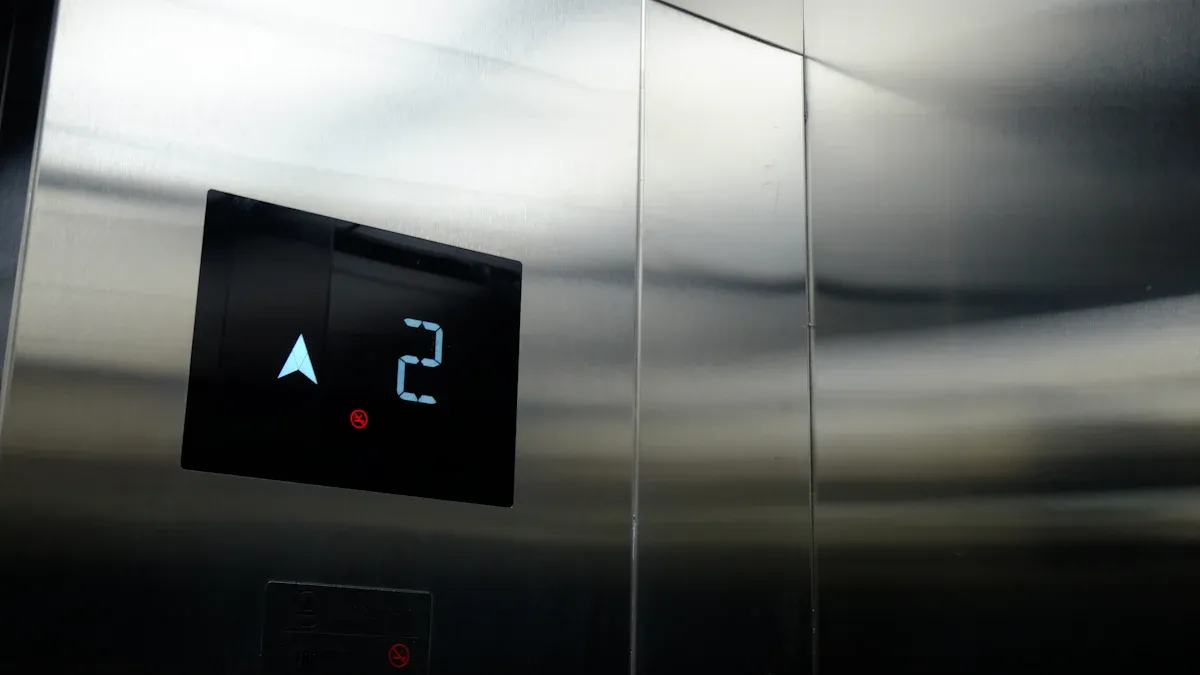
Elevator factories transform raw materials into cutting-edge vertical transportation systems. Engineers use precision tools to create components that meet exact specifications. Quality control teams monitor each stage to ensure reliability. Advanced technologies like automation and robotics streamline production. This combination of expertise and innovation guarantees elevators meet safety standards and perform efficiently.
Key Takeaways
- Elevator factories use smart machines like robots to work faster and safer.
- Making elevators needs knowing building needs, saving energy, and helping users, especially in tall buildings.
- Safety is very important; factories test a lot and follow strict rules to make sure elevators are safe and work well.
Design and Engineering
Conceptualizing Elevator Designs
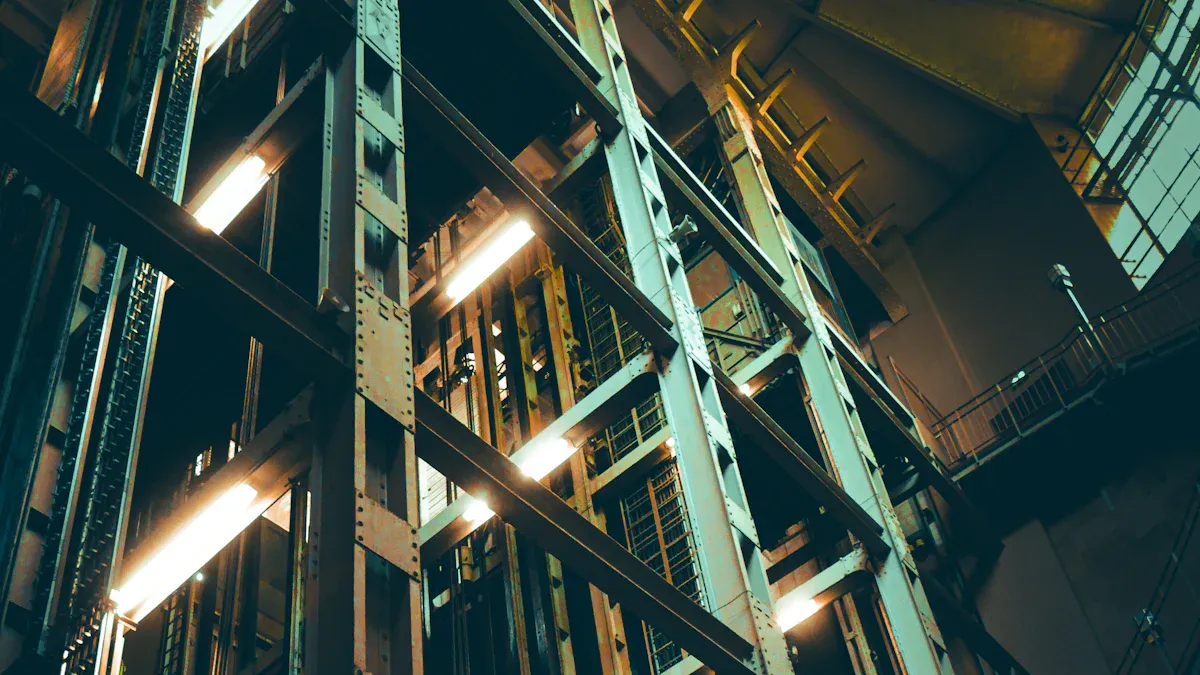
Designing an elevator begins with understanding the specific needs of the building and its users. Engineers consider factors such as building height, expected traffic, and energy efficiency. For instance, high-rise buildings often require faster elevators with advanced control systems, while smaller structures may prioritize cost-effective solutions.
The growing demand for innovative designs is evident in the smart elevator market, which was valued at USD 18.75 billion in 2019 and is projected to reach USD 38.27 billion by 2027, growing at a CAGR of 9.1%. This trend highlights the increasing importance of integrating modern technologies into elevator designs.
Developing Engineering Blueprints
Once the design concept is finalized, engineers create detailed blueprints that outline every component of the elevator system. These blueprints include specifications for car speed, load capacity, and safety mechanisms. Compliance with international safety standards, such as ASME 17.1 in the U.S. or EN 80.2x in Europe, ensures the elevator operates safely and efficiently.
Key benchmarks in blueprint development include:
- R&D costs ranging from $50,000 to $200,000 for mid-sized projects.
- Safety features like emergency protocols and door operation sequences.
- Performance metrics such as maximum allowable car speed and load capacity.
Incorporating Smart and Custom Features
Modern elevators often include smart features to enhance efficiency and user experience. Predictive maintenance sensors, for example, reduce downtime by 70%, while cloud-connected systems analyze millions of data points monthly to optimize cab allocation. These features not only improve operational efficiency but also contribute to energy savings of up to 40%.
Urbanization and high-rise development further drive the need for custom solutions. Over 55% of the global population lives in cities, a figure expected to rise to 68% by 2050. As a result, elevators equipped with intelligent control systems and regenerative drives are becoming essential in urban infrastructure.
Component Manufacturing
Producing Mechanical Components (e.g., motors, cables, pulleys)
The production of mechanical components forms the backbone of elevator manufacturing. Factories utilize advanced machinery to create motors, cables, and pulleys with high precision. Motors, often the most critical component, are designed to deliver consistent power and efficiency. High-tensile steel cables undergo rigorous testing to ensure they can support heavy loads without compromising safety. Pulleys, crafted from durable materials, facilitate smooth and reliable movement of the elevator car.
Modern factories employ automated systems to enhance production accuracy and reduce errors. For example, robotic arms assemble motor parts with a tolerance of less than 0.01 millimeters, ensuring optimal performance. These innovations not only improve the quality of components but also reduce production time, enabling factories to meet growing demand efficiently.
Manufacturing Elevator Cabins and Doors
Elevator cabins and doors are manufactured with a focus on safety, durability, and aesthetics. Factories use materials such as stainless steel, aluminum, and tempered glass to construct cabins that can withstand wear and tear while maintaining a sleek appearance. Doors, often the first point of contact for passengers, are designed to operate smoothly and safely.
To validate the safety and durability of these components, factories implement stringent measures. The following table highlights key safety upgrades and their benefits:
| Safety Measures | Description |
|---|---|
| Renewal of the controller | Updates to the control system for improved safety and efficiency. |
| Rope replacement | Ensures the integrity and reliability of the elevator’s lifting mechanism. |
| Elevator door conversion | Transition from manual to automatic doors enhances safety for passengers. |
| Emergency call system | Cellular connectivity for immediate assistance in emergencies. |
| Retrofit of light curtains | Enhances safety by preventing door closure on passengers. |
These measures ensure that cabins and doors meet the highest safety standards, providing passengers with a secure and comfortable experience.
Developing Control Systems and Software
Control systems and software play a pivotal role in enhancing elevator performance and user experience. Factories develop these systems using cutting-edge technologies such as artificial intelligence and the Internet of Things (IoT). For instance, the MAX IoT platform by TK Elevator collects real-time data on elevator status, enabling predictive maintenance. This reduces unplanned downtime and improves reliability.
Innovative control systems offer several advantages:
- Elevator destination control reduces wait times by allowing passengers to select their desired floor before entering.
- Intelligent elevator dispatch uses AI to predict busy floors, optimizing traffic flow and reducing energy consumption.
- Energy-efficient systems incorporate regenerative drives and LED lighting, minimizing environmental impact.
- AI-powered predictive maintenance identifies potential issues early, extending the elevator’s lifespan and enhancing safety.
- High-speed elevators enable rapid transport in tall buildings, significantly reducing travel time.
These advancements not only improve operational efficiency but also contribute to energy savings and reduced operating expenses. By integrating these technologies, factories ensure that elevators meet the demands of modern infrastructure.
Assembly and Integration
Combining Mechanical and Electrical Components
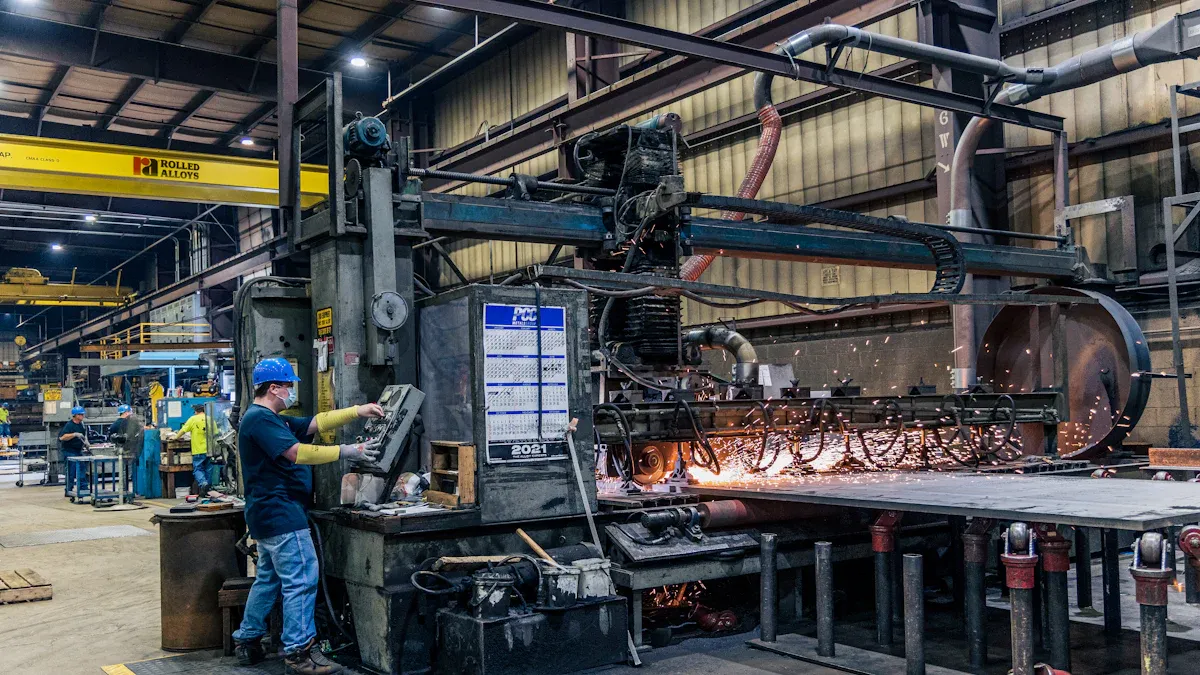
The assembly process begins by integrating mechanical and electrical components to create a cohesive elevator system. Factories rely on advanced technologies and precision tools to ensure seamless compatibility between these elements. For example:
- Production Assembly Systems, Inc. (PAS) employs state-of-the-art machinery to enhance precision and reliability during assembly.
- Dalsin Industries, with nearly 80 years of experience, combines advanced technology and ISO-certified processes to optimize both mass production and custom projects.
This integration not only improves energy efficiency but also ensures optimal performance. Research highlights that regenerative systems significantly reduce energy consumption, making elevators more environmentally friendly. These advancements benefit both manufacturers and building designers by lowering energy costs while maintaining passenger comfort.
Installing Safety Features
Safety features are critical in ensuring passenger security. Factories install both mechanical and electrical components to prevent accidents and enhance operational reliability. Key safety features include:
| Safety Feature Type | Description |
|---|---|
| Mechanical Components | Safety brakes and physical mechanisms that prevent free falls or sudden stops. |
| Electrical Components | Controllers, sensors, and software that monitor and manage elevator operations. |
| Advanced Technologies | Modern computing and sensor technology for real-time safety monitoring and fault detection. |
These features work together to create a secure environment for passengers, meeting stringent safety standards.
Final Adjustments and Calibration
After assembly, technicians perform final adjustments and calibration to ensure the elevator operates smoothly. This stage involves fine-tuning the control systems, aligning mechanical components, and testing the software for accuracy. Factories use advanced diagnostic tools to identify and resolve any discrepancies. These adjustments guarantee that the elevator meets performance benchmarks and complies with industry regulations. By the end of this process, the system is ready for rigorous testing and quality control.
Testing and Quality Control
Conducting Load and Stress Tests
Elevator factories conduct rigorous load and stress tests to ensure the durability and reliability of their products. These tests simulate real-world conditions by subjecting the elevator to weights exceeding its rated capacity. Engineers monitor the system’s performance under these extreme conditions to verify its structural integrity and operational efficiency.
Key performance indicators assessed during these tests include:
| Performance Indicator | Description |
|---|---|
| Load Capacity | The maximum weight the elevator can safely carry, tested beyond its rated capacity. |
| Speed | Assessment of the elevator’s speed variations, including acceleration and deceleration. |
| Safety Mechanisms | Evaluation of braking systems, emergency stops, and alarms to ensure effective responses. |
These tests not only confirm the elevator’s ability to handle heavy loads but also identify potential weaknesses in its design. By addressing these issues early, manufacturers enhance the safety and reliability of their products before they reach the market.
Verifying Safety Mechanisms
Safety mechanisms form the backbone of any elevator system. Factories implement a multi-layered approach to verify these features, ensuring they function as intended during emergencies. Engineers test braking systems to confirm they can halt the elevator safely in case of a malfunction. Emergency stop buttons and alarms undergo rigorous checks to guarantee they activate promptly when needed.
Advanced technologies, such as real-time monitoring sensors, play a crucial role in this process. These sensors detect anomalies in the elevator’s operation and trigger safety protocols automatically. For instance, if the system detects an unusual speed variation, it activates the braking mechanism to prevent accidents. This proactive approach minimizes risks and enhances passenger safety.
Ensuring Compliance with Industry Standards
Compliance with national and international standards is a critical aspect of elevator manufacturing. Regulatory frameworks, such as the American Society of Mechanical Engineers (ASME) codes and the European Lift Directive, mandate regular inspections and maintenance to uphold safety standards. Countries like Germany and France enforce stringent regulations, requiring detailed documentation of inspection results. This ensures a culture of safety and accountability within the industry.
Factories adhere to these standards by conducting comprehensive tests on key technical parameters:
| Technical Parameter | Description |
|---|---|
| Rated Load Capacity | Maximum weight capable of being handled by a lift. |
| Speed | How fast an elevator operates, expressed in feet per minute (fpm) or meters per second (m/s). |
| Acceleration/Deceleration Rates | Essential for ensuring comfortable and safe lifts. |
| Leveling Accuracy | Precision of the elevator floor leveling with the building, typically within a few millimeters. |
| Backup Power | Ensures elevators remain operational during power outages. |
| Full-load Tests Frequency | Recommended to conduct at least once annually for safety compliance. |
By meeting these benchmarks, manufacturers not only comply with legal requirements but also build trust with their customers. This commitment to quality and safety solidifies the elevator’s role as a reliable component of modern infrastructure.
Packaging and Shipping
Preparing Elevators for Transport
Once an elevator is fully assembled and tested, factories prepare it for transport to its destination. This process involves disassembling the elevator into manageable components, such as the cabin, doors, and control systems. Each part is carefully packed to prevent damage during transit. Factories use custom-designed crates and protective materials like foam padding and shrink wrap to secure the components.
Labeling plays a crucial role in this stage. Each package is marked with detailed instructions for reassembly, ensuring a smooth installation process at the site. Additionally, factories include comprehensive documentation, such as user manuals, safety certifications, and maintenance guidelines. These measures guarantee that the elevator arrives in perfect condition and is ready for installation.
Coordinating Logistics for Delivery
Efficient logistics coordination ensures timely delivery of elevators to construction sites. Factories collaborate with logistics companies to plan transportation routes, considering factors like distance, road conditions, and delivery deadlines. For international shipments, factories comply with customs regulations and prepare the necessary export documentation.
To minimize delays, factories use advanced tracking systems to monitor shipments in real time. These systems provide updates on the location and status of the delivery, allowing stakeholders to plan accordingly. In cases of unexpected delays, contingency plans are activated to ensure the elevator reaches its destination without compromising project timelines.
By streamlining packaging and logistics, factories maintain their commitment to delivering high-quality products that meet customer expectations.
Elevator factories exemplify operational excellence by integrating advanced technologies and rigorous quality control. From design to delivery, every stage is optimized to meet industry standards. The global elevator market reflects this efficiency, with a projected growth from USD 161.73 billion in 2024 to USD 244.27 billion by 2033, growing at a rate of 4.64%.
FAQ
What materials are commonly used in elevator manufacturing?
Factories use stainless steel, aluminum, tempered glass, and high-tensile steel cables. These materials ensure durability, safety, and aesthetic appeal in elevator components.
How do factories ensure elevator safety during production?
Factories conduct load tests, verify safety mechanisms, and comply with industry standards. Advanced sensors monitor operations to detect anomalies and activate safety protocols.
What technologies improve elevator efficiency?
Elevators use AI-powered dispatch systems, regenerative drives, and IoT platforms. These technologies optimize traffic flow, reduce energy consumption, and enable predictive maintenance.
Post time: May-13-2025