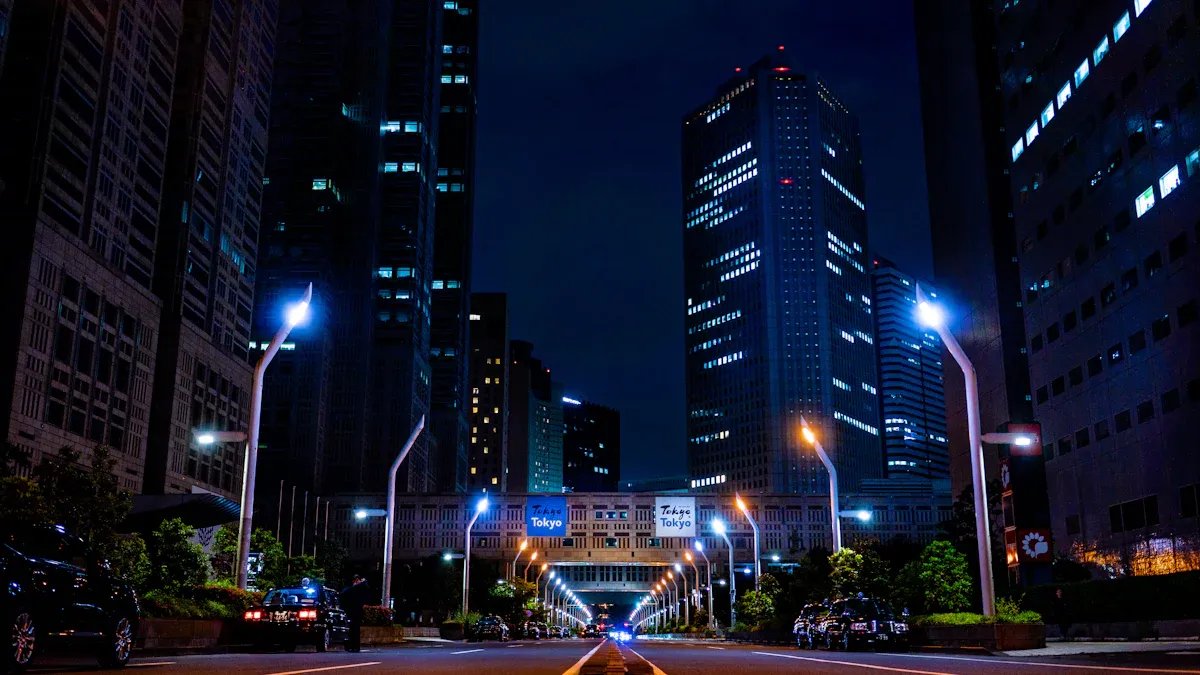
Smart elevators play a vital role in modern urban development. Rapid urbanization in China has surged the demand for elevator installations. Traditional elevator systems are undergoing transformation through advanced technologies like touchless interfaces and AI integration, enhancing efficiency and user experience in high-rise buildings.
Key Takeaways
- Smart elevators enhance urban mobility by integrating AI and IoT, improving efficiency and user experience in high-rise buildings.
- Energy-efficient technologies in smart elevators can reduce power consumption by up to 50%, contributing to sustainable urban development.
- Regular maintenance and adherence to safety standards are crucial for extending the lifespan of elevators, which typically last 20 to 30 years.
Current State of the Elevator Industry in China
China’s elevator industry has experienced remarkable growth in recent years. The market size is projected to reach USD 12.38 billion by 2024. This growth reflects the increasing demand for vertical transportation solutions in urban areas. As cities expand and high-rise buildings become more common, the need for efficient elevator systems rises.
Several leading manufacturers dominate the Chinese elevator market. These companies include:
- Hitachi Elevator (China)
- Kone China
- Suzhou Dazen Electromechanical Technology Co., Ltd
- Mitsubishi ELECTRIC (Shanghai)
- CANNY ELEVATOR
- General Elevator Co., Ltd.
- TK Elevator
- YUNGTAY Elevator
- Schindler
- Toshiba
These manufacturers contribute significantly to the industry’s growth, each offering unique innovations and services. For instance, CANNY focuses on mid-to-high-end elevators, while KONE is known for its commitment to quality and innovation.
Safety remains a top priority in the elevator industry. Regulatory standards govern elevator safety and technology in China. Key regulations include:
| Standard | Description |
|---|---|
| GB 7588 | National elevator safety standard focusing on safety design, installation, maintenance, and inspection protocols. |
| Special Equipment Safety Law | Establishes regulations for operation and maintenance of special equipment, including elevators, with strict safety inspections and certification procedures. |
| Regulations on Safety Supervision over Special Equipment | Influences lift maintenance policies and mandates quality assurance periods for elevators. |
Recent updates to these standards incorporate advanced sensor technologies for real-time monitoring and AI-driven diagnostics for predictive maintenance. These innovations enhance safety and reliability in elevator operations.
The average lifespan of elevators in Chinese urban buildings typically ranges from 20 to 25 years. However, well-maintained elevators can last up to 30 years. This longevity underscores the importance of regular maintenance and adherence to safety standards.
China’s elevator industry growth rate outpaces many global markets. The industrial elevator market is projected to grow at a compound annual growth rate (CAGR) of 8.2% through 2030. This growth is driven by the country’s industrial policy reforms and large-scale smart infrastructure initiatives, distinguishing it from other regions.
Technological Advancements in Elevators

The elevator industry in China has embraced numerous technological advancements that enhance performance, safety, and user experience. These innovations not only improve operational efficiency but also align with the growing demand for smart building solutions.
Integration of Artificial Intelligence and IoT
Artificial intelligence (AI) and the Internet of Things (IoT) have revolutionized elevator systems. Smart elevators now utilize these technologies to streamline operations. For instance, Hyun-Shin Cho, Head of Digital Transformation at TK Elevators, explains:
“Our latest systems allow full integration into smart buildings. This also includes the access management. When you enter a building with an appointment, the system will already know where you are heading for. Through a smartphone or a wearable, you will be informed which lift to take – and will be brought to the floor where your appointment is scheduled without even pushing a button.”
This integration leads to significant improvements in efficiency. Smart elevators utilizing AI and image processing technology have shown:
- A 15% improvement in wait times.
- A 20% reduction in energy use.
Energy Efficiency Innovations
Energy-efficient technologies have become a focal point in the elevator industry. These advancements have led to substantial reductions in power consumption. Key innovations include:
- Regenerative drive systems that can reduce elevator power consumption by up to 50%.
- Premium elevator motors that decrease energy use by 30-40% compared to traditional models.
Furthermore, integrating Lift Energy Storage Technology contributes to energy savings and stabilizes peak power demand, benefiting the overall energy grid.
Predictive Maintenance Systems
Predictive maintenance systems play a crucial role in minimizing elevator downtime. These systems leverage IoT and AI technologies to monitor elevator performance in real-time. The following table summarizes the impact of these advancements:
| Evidence Description | Impact on Elevator Downtime |
|---|---|
| Intelligent speed limiter systems with sensors and IoT capabilities enable predictive maintenance and immediate fault detection. | Reduces downtime and enhances safety. |
| Advancements in IoT, AI, and sensor technology enhance real-time monitoring and predictive maintenance. | Improves operational reliability and minimizes unexpected failures. |
Enhanced Safety Features
Safety remains a top priority in the elevator industry. Recent advancements have significantly improved safety measures. The integration of big data technology and deep learning has led to real-time monitoring systems for elevators. These enhancements have contributed to a decrease in elevator accidents in China. Statistics indicate a rise in major elevator accidents from 2015 to 2017, but increased public awareness and technological advancements have resulted in a gradual decrease in accidents in recent years.
The Role of Smart Elevators in Urban Development

Smart elevators significantly contribute to urban development in China. They enhance inclusivity and accessibility, allowing individuals with mobility needs to navigate urban environments effortlessly. These elevators support urban redevelopment initiatives aimed at creating more inclusive urban villages across 300 cities. They play a crucial role in improving the quality of life for the elderly, enabling them to remain connected to their communities.
In high-rise buildings, smart elevators optimize operations through advanced algorithms and sensors. This technology reduces wait times and energy consumption, enhancing efficiency in high-traffic areas. Safety features, such as emergency communication systems and predictive maintenance capabilities, ensure passenger safety. Integration with building management systems allows for centralized control, improving operational efficiency and security.
Moreover, smart elevators align with sustainable urban development initiatives. They are projected to reach a market value of $32.58 billion by 2032, driven by the demand for energy-efficient infrastructure. High-efficiency elevators can use up to 40% less electricity than conventional models, leading to significant energy savings. Innovations in elevator technology have also reduced downtime by up to 50%, extending the lifespan of urban infrastructure.
Challenges and Opportunities in the Elevator Market
The elevator market in China faces several challenges that impact its growth and innovation. Key issues include:
- Inadequate safety regulations: Current regulations do not sufficiently address safety concerns, leading to potential risks.
- Quality of materials: Manufacturers often use subpar materials, which can compromise elevator safety and longevity.
- Installation practices: Poor installation and maintenance practices contribute to accidents and operational failures.
Additionally, intense price competition complicates the market landscape. Numerous domestic and international players drive prices down, forcing local manufacturers to compromise profit margins to secure contracts. This fragmentation can hinder innovation and quality improvements.
Rising material costs also pose a significant challenge. Tariffs on essential components like steel and aluminum increase production costs for manufacturers. Supply chain disruptions further exacerbate these issues, affecting pricing and availability.
Despite these challenges, opportunities abound in the smart elevator sector. The market is projected to grow at a compound annual growth rate (CAGR) of 9.2% until 2035. This growth stems from urbanization, a booming construction industry, and a rising demand for high-rise buildings. Foreign investment in advanced technologies and energy-efficient solutions can significantly enhance the sector’s development. The Chinese government’s support for retrofitting existing buildings also opens avenues for innovation and modernization in the elevator market.
Smart elevators represent a transformative force in China’s urban landscape. They enhance user experience and operational efficiency through ongoing innovations, such as the digital thread that connects systems for improved performance.
Key investment trends shaping this market include:
- Significant government investments in residential infrastructure.
- Rapid growth in the construction and real estate sectors.
- Increasing demand for advanced technology due to urbanization.
- A shift towards green technology in smart elevator systems.
The future of urban mobility hinges on these advancements, making continued innovation and investment essential for the elevator industry’s evolution.
FAQ
What are smart elevators?
Smart elevators use advanced technology, such as AI and IoT, to optimize performance, enhance safety, and improve user experience in high-rise buildings.
How do smart elevators improve energy efficiency?
Smart elevators incorporate regenerative drive systems and energy-efficient motors, reducing power consumption by up to 50% compared to traditional models.
What role do smart elevators play in urban accessibility?
Smart elevators enhance accessibility for individuals with mobility needs, allowing them to navigate urban environments and improving overall quality of life.
Post time: Sep-28-2025