
People step into an elevator every day. Some feel nervous, while others treat it like a normal routine.
- In the U.S., elevators carry about 20,000 people each year and make billions of trips.
- Accidents happen from time to time, often caused by mechanical problems or human error.
These moments can reveal courage, kindness, or even fear.
Key Takeaways
- Always follow elevator safety rules and avoid quick fixes to prevent accidents and keep everyone safe.
- Working together calmly during elevator problems helps solve issues and keeps people safe until help arrives.
- Elevators can create special moments between strangers and even start friendships, showing how small spaces connect us.
Elevator Problem-Solving and Unintended Consequences
The Quick Elevator Fix That Backfired
Sometimes, people try to solve problems quickly, but things do not always go as planned. In one building, a maintenance worker tried to repair the elevator door seals. He did not have much training and skipped important safety steps. The worker ignored the lockout/tagout rules and disabled the safety alarms. Suddenly, the elevator moved while he was working, and a terrible accident happened. This story shows how a fast fix can lead to serious trouble when people do not follow safety rules.
In another case, tenants in a New York office building complained about long elevator waits. The building managers wanted to stop the complaints, so they put mirrors in the lobby. People became distracted by their reflections and stopped noticing the wait. The complaints ended, but the real problem—the slow elevator—remained. This solution changed how people felt but did not fix the actual issue.
Quick fixes can sometimes hide bigger problems. It is important to look for real solutions, not just easy ones.
A table below shows how often different types of human errors happen in high-pressure situations:
| Error Type | Percentage of Errors | Error Rate |
|---|---|---|
| Knowledge-based | 15% | 1 in 2 to 1 in 10 |
| Rule-based | 60% | 1 in 1,000 |
| Skills-based | 25% | Less than 1 in 10,000 |
These numbers remind everyone that mistakes can happen, especially when people feel rushed or stressed.
Teamwork in the Elevator Saves the Day
When something goes wrong in an elevator, teamwork can make all the difference. Imagine a group of people trapped between floors. The lights flicker, and the elevator stops moving. Some people feel scared, but others stay calm and start talking to each other. They share ideas and decide to press the emergency button together. One person keeps everyone calm by telling jokes. Another calls for help using a cell phone. Working as a team, they make sure everyone stays safe until help arrives.
Stories from other fields, like aviation, show how teamwork saves lives. On a flight with a serious control problem, the crew worked together, shared information, and made quick decisions. Their teamwork helped them land safely, even when things looked bad. In an elevator, just like on a plane, people who work together can solve problems and avoid accidents.
Teamwork turns a scary moment into a story of courage and connection.
The Elevator as a Shortcut: Lessons from Life Choices
Many people see the elevator as a shortcut. It is fast and easy. But sometimes, taking the easy way leads to trouble. A child named Jump Jump once rushed into an elevator without waiting for others to get out. Inside, he jumped around and ignored warnings. Suddenly, the elevator dropped and stopped between floors. Jump Jump felt scared and trapped. Rescue workers had to come and help him out. After this, he promised never to jump in the elevator again.
This story teaches a big lesson. Shortcuts can seem fun, but they can also bring danger. Jump Jump learned to be patient and careful. He realized that following the rules keeps everyone safe.
Sometimes, the fastest way is not the best way. Safe choices matter more than speed.
Elevator Safety and Human Behavior
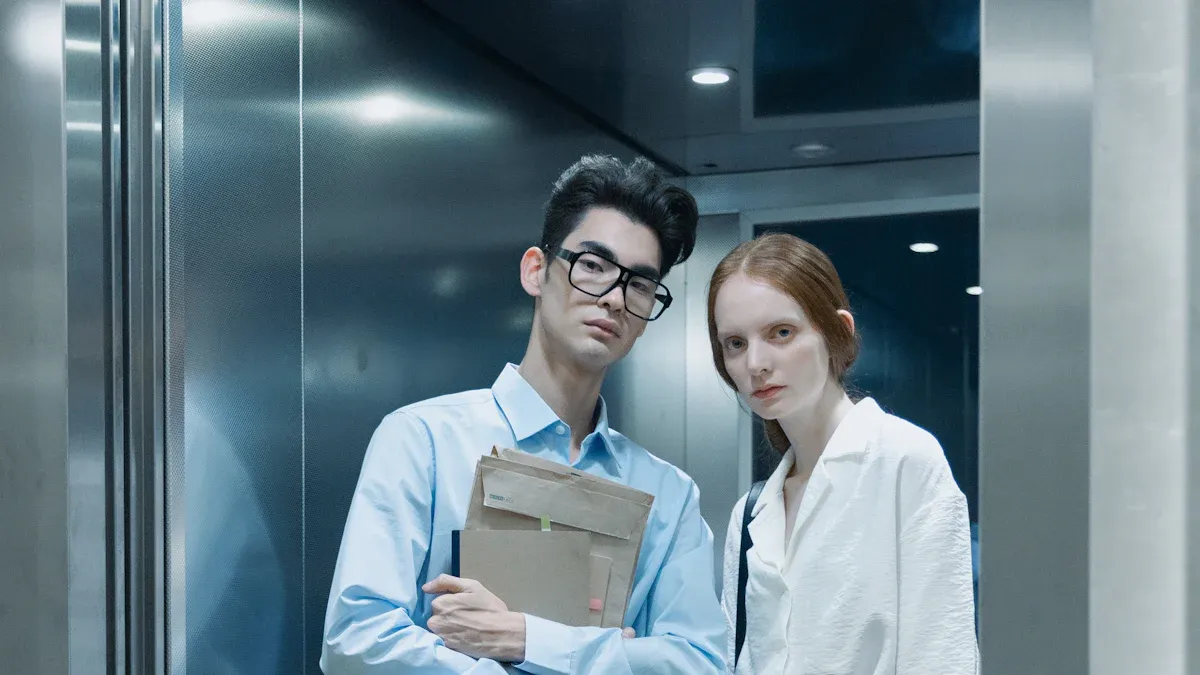
A Child’s Lesson in Elevator Safety
Children often see elevators as fun rides, but safety rules matter. One day, a young girl named Mia ran ahead of her parents and pressed the elevator button. She squeezed inside before anyone else could join her. The doors closed, and she found herself alone. Mia remembered her teacher’s advice: never play in elevators and always wait for adults. She pressed the emergency button and spoke to the operator. Soon, help arrived, and her parents hugged her tightly.
Many accidents happen when people ignore simple safety steps. According to recent statistics, about 30 people die each year in the U.S. from elevator and escalator incidents. Most of these deaths involve elevators. Children are not immune—13 children under age 10 lost their lives in a ten-year period. The table below shows more details about elevator safety incidents:
| Statistic/Aspect | Details |
|---|---|
| Annual deaths (elevators and escalators) | About 30 deaths per year |
| Annual serious injuries | Approximately 17,000 per year |
| Deaths caused by elevators | Nearly 90% of deaths related to elevators |
| Non-work related passenger deaths (10 years) | 56 deaths; 13 involved children age 10 or younger |
| Main causes of occupational deaths | 49% falls into elevator shafts; caught in/between moving parts; struck by elevators |
Post time: Jul-07-2025