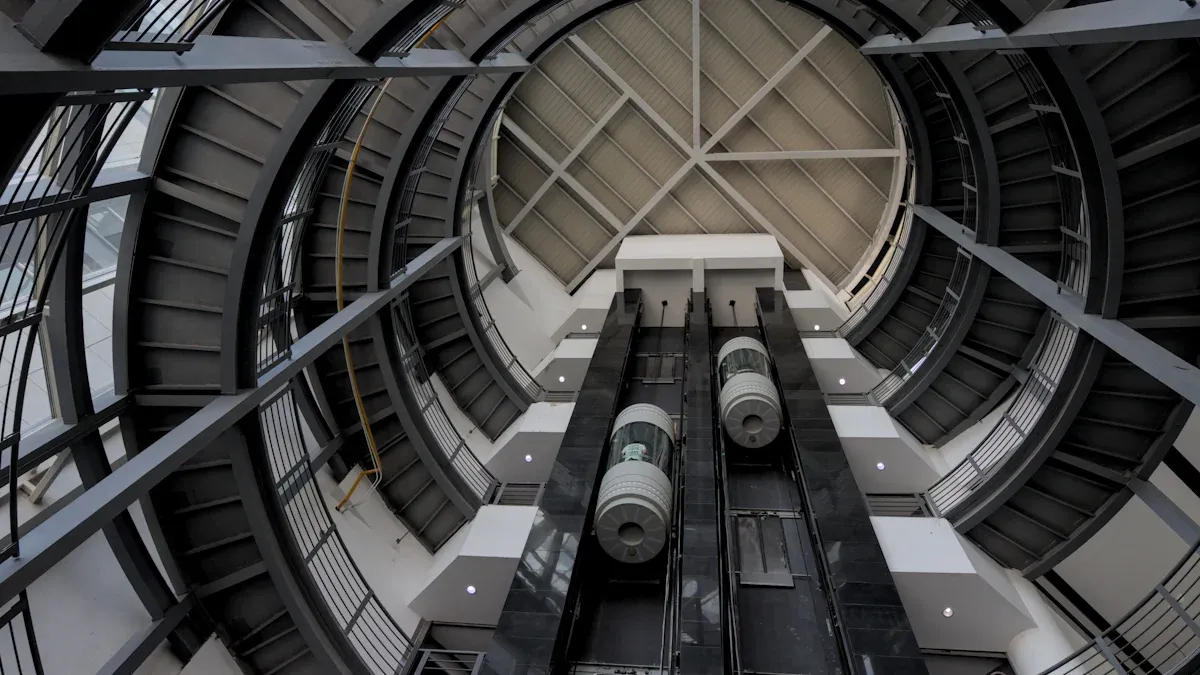
Urban areas are growing fast, and taller buildings are becoming the norm. How do people move efficiently within these massive structures? Innovations in elevator technology are stepping in to solve this challenge. From improving energy use to creating a smoother ride, these advancements are reshaping how we think about vertical transportation.The future? It’s looking smarter, faster, and more sustainable.
Key Takeaways
- AI helps elevators work better by guessing demand and planning routes. This makes wait times shorter and rides smoother.
- Destination dispatch systems put people going to the same floors together. This cuts down wait times and saves energy in buildings.
- Regenerative braking collects energy when elevators go down. This lowers costs, cuts pollution, and makes elevators eco-friendly.
Smart Elevators with AI
AI Features Enhancing Elevator Operations
Artificial intelligence is revolutionizing how elevators operate. By integrating advanced technologies like machine learning and predictive analytics, elevators are becoming smarter and more efficient. For instance, AI-powered systems can optimize traffic flow by analyzing real-time data. This means elevators can anticipate demand and adjust their routes to reduce congestion.
Some standout features include:
- Smart dispatching that groups passengers heading to the same floors.
- Service robots that assist with maintenance and operations.
- Advanced algorithms that improve energy efficiency and minimize wait times.
A recent study highlights the role of AI in contactless elevator systems. Using tiny Machine Learning (tinyML) and convolutional neural networks (CNNs), these systems achieve impressive results. They detect people with 83.34% accuracy and recognize keywords with 80.5% efficacy. Even better, they respond in under five seconds. This not only boosts operational efficiency but also enhances safety, especially in environments where reducing physical contact is crucial.
Impact on User Experience and Efficiency
AI doesn’t just make elevators smarter—it makes them more user-friendly. Imagine stepping into a building where the elevator already knows your destination. AI-driven destination dispatch systems group passengers heading to similar floors, cutting down wait times. This creates a smoother, faster experience for everyone.
Additionally, predictive analytics ensures elevators stay operational. By monitoring performance in real time, AI can detect potential issues before they cause downtime. This means fewer delays and a more reliable service. Whether in a bustling office tower or a residential high-rise, these innovations are transforming vertical transportation into a seamless experience.
Destination Dispatch Systems
Optimizing Traffic Flow in Buildings
Destination dispatch systems are transforming how people move through buildings. Instead of pressing a button inside the elevator, passengers select their destination before boarding. This allows the system to group people heading to the same floors into the same car. The result? A smoother and more organized flow of traffic.
These systems also optimize elevator banks for better efficiency. For example, smaller elevators and fewer stops mean less congestion in lobbies. Renovations benefit too, as handling capacity increases without needing new hardware. The table below highlights some key advantages:
| Benefit Description | Impact on Efficiency |
|---|---|
| More efficiently configured elevator banks | Smaller elevators, fewer elevators, and smaller lobbies increase tenant capacity |
| Increased handling capacity in renovations | Achieved without changing existing hardware configuration |
| Improved passenger experience | Shorter wait and travel times, reduced car crowding, fewer stops |
| Energy savings | Matching elevators to consolidated passenger demand |
| Improved management of peak traffic | Faster travel times and reduced energy consumption |
| Reduced travel time | Passengers reach destinations faster than with conventional systems |
| Case study results | Passengers reached destinations almost 50% faster with zoned DD than conventional DD systems |
Reducing Wait Times and Energy Use
Destination dispatch systems significantly reduce wait times by grouping passengers heading to the same floors. This approach minimizes unnecessary stops and ensures faster travel. During low-traffic periods, these systems save energy by placing elevators in standby mode.
Here are some additional benefits:
- Shorter waiting and travel times for passengers.
- Intelligent energy management during quiet hours.
- Reduced energy consumption by optimizing elevator operations.
These systems not only improve efficiency but also enhance the overall passenger experience. By intelligently managing traffic flow, they make buildings more functional and sustainable.
Energy-Efficient Elevators
Regenerative Braking Technology
Regenerative braking technology is changing how elevators consume energy. Instead of wasting energy during deceleration, this system captures the kinetic energy and repurposes it. The recovered energy powers the elevator or other building systems, reducing overall electricity use.
This innovation doesn’t just save energy—it also cuts costs. For example, elevators equipped with regenerative braking can recover up to 45% of the energy used during operation. Over an eight-hour period, this translates to 49.6 kW of energy saved. Annually, the savings can reach €4285.44, while reducing CO₂ emissions by over 10,000 kilograms.
| Description | Value |
|---|---|
| Energy recovered during deceleration | 6.2 kW |
| Percentage of energy recovered | 45% |
| Total energy consumption in 8 hours | 110.4 kW |
| Energy recovered in 8 hours | 49.6 kW |
| Annual energy cost recovered | €4285.44 |
| Energy recovered in a year | 17.856 kW |
| Annual cost of energy consumed | €9538.56 |
| Total energy consumption per year | 39,744 kW |
| CO2 emissions reduced | 10,177 kg/year |
Elevators with regenerative braking don’t just benefit the environment—they also make buildings more sustainable and cost-effective.
Renewable Energy Integration
Elevators are becoming greener by integrating renewable energy sources. Solar panels and wind turbines can now supply power to elevator systems, reducing reliance on traditional electricity grids. This approach aligns with the growing demand for sustainable buildings.
Energy-efficient designs also focus on monitoring energy use. Building managers track CO₂ emissions, electricity consumption, and regenerative energy generation to ensure compliance with green standards. Elevators, which can account for up to 10% of a building’s energy use, benefit greatly from these innovations. During peak times, this figure can rise to 50%, making renewable energy integration even more critical.
| Metric | Description |
|---|---|
| Energy Consumption Reduction | Elevators can account for 2% to 10% of total building energy use, potentially rising to 50% during peak times. The new methodology aims to reduce this consumption through regenerative systems. |
| Regenerative Energy Capture | The system captures kinetic energy typically lost during operation, allowing for reuse in powering elevators or other systems. |
| Monitoring Requirements | Guidelines include tracking CO₂ emissions, electricity usage, and regenerative electricity generation to ensure compliance and effectiveness. |
| Financial Viability Assessment | Emphasizes the role of carbon credit revenues in offsetting costs, with a benchmark penetration rate of 20% for adoption validation. |
By combining renewable energy with regenerative braking, elevators are becoming key players in sustainable urban development. These technologies not only reduce energy consumption but also support the transition to greener cities.
Multi-Directional Elevators
Innovations Like the MULTI System
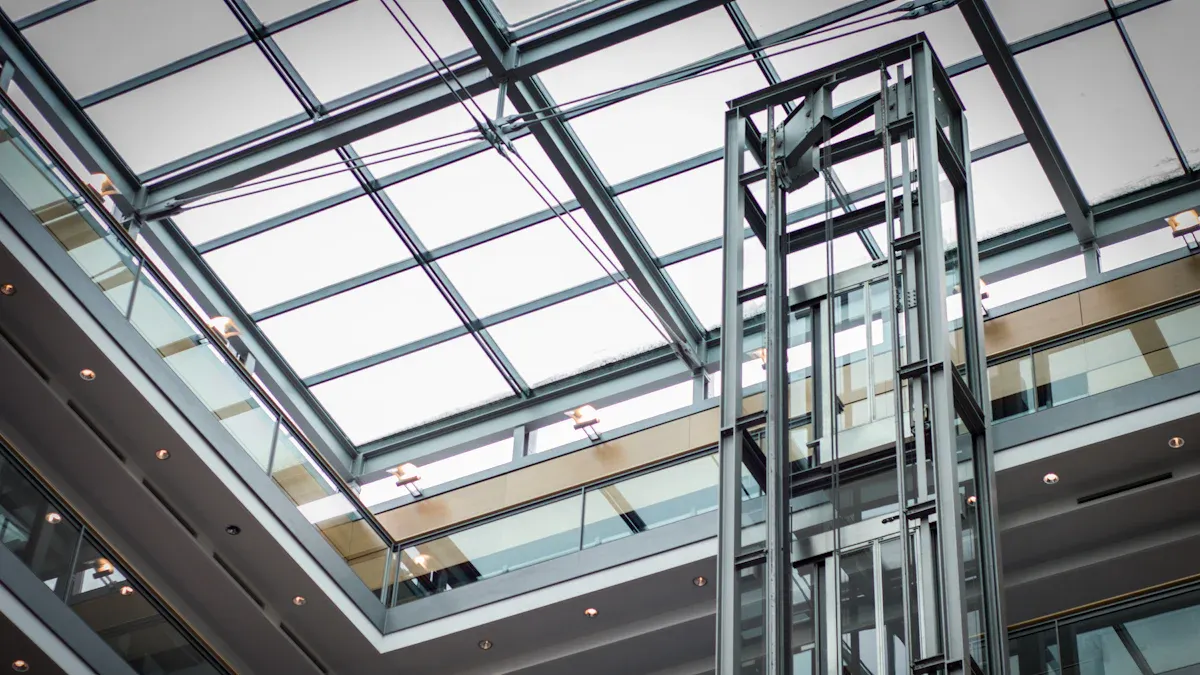
Traditional elevators have always moved in one direction—up and down. But what if they could move sideways too? That’s exactly what the MULTI system, developed by TK Elevator, brings to the table. This groundbreaking technology eliminates the need for ropes, allowing elevators to travel horizontally as well as vertically. By doing so, it increases transport capacity by 50% and reduces the space elevators take up in buildings by half.
Other innovations, like the TWIN Traction Elevator (TTE) system, are also pushing boundaries. The TTE system can handle loads of up to 50 tons, making it ideal for construction projects. Future versions aim to carry even heavier loads, up to 80 tons, while improving safety. These advancements are reshaping how elevators function, making them more versatile and efficient.
The Otis Elevator Company has also developed a prototype for multi-directional movement. This innovation allows skyscrapers to use space more effectively, solving the limitations of traditional vertical-only systems.
Benefits for Urban Mobility and Skyscrapers
Multi-directional elevators are a game-changer for urban mobility. They eliminate the height restrictions of traditional systems, enabling taller buildings without the hassle of multiple transfers. The MULTI system, for example, can increase usable space in skyscrapers by up to 30%. This smaller footprint means architects can design more functional and spacious buildings.
These systems also improve efficiency. By using fewer elevator cars to handle higher transport capacity, they reduce energy consumption and carbon emissions. A 2021 study even suggests that multi-directional elevators could integrate with public transportation, creating a seamless urban mobility network.
In cities where space is limited, these innovations provide a smart solution. They make skyscrapers more practical and sustainable, paving the way for the future of urban living.
IoT-Enabled Predictive Maintenance
Real-Time Monitoring with IoT Sensors
IoT sensors are transforming how elevators are maintained. These smart devices continuously monitor performance, collecting data on everything from motor temperature to door operation. This real-time monitoring allows technicians to detect issues before they escalate. For example, sensors can identify unusual vibrations or slow response times, signaling the need for maintenance.
Case studies highlight the benefits of IoT in elevator systems. One example shows how predictive maintenance improves safety and reliability while reducing downtime and costs. Another project in London used IoT sensors to prevent equipment failures, keeping construction schedules on track. Mitsubishi’s remote monitoring system also demonstrates how proactive planning leads to quicker fixes and enhanced safety.
| Case Study | Description | Benefits |
|---|---|---|
| IoT in Elevator Maintenance | Shift from traditional to predictive maintenance | Improved safety, reliability, and reduced downtime |
| London Skyscraper Project | IoT sensors detected issues in crane equipment | Avoided breakdowns and maintained schedule |
| Mitsubishi Elevator System | Remote monitoring for proactive maintenance planning | Quick fixes and enhanced safety |
Minimizing Downtime and Costs
Predictive maintenance powered by IoT doesn’t just improve reliability—it saves money too. By diagnosing problems early, technicians can replace small components instead of waiting for major failures. This approach reduces the need for costly full-unit replacements.
IoT systems also optimize maintenance schedules. They differentiate urgent issues from minor ones, ensuring technicians focus on critical repairs first. Historical data comparisons help engineers anticipate potential failures, allowing them to prepare in advance. This proactive approach minimizes downtime and keeps elevators running smoothly.
| Evidence | Description |
|---|---|
| Ongoing monitoring of equipment | Saves costs by upgrading parts instead of replacing entire units |
| Immediate notification of issues | Alerts maintenance teams before users notice problems, reducing response time |
| Planned downtime | Allows maintenance during off-peak hours, improving operational efficiency |
By integrating IoT technology, elevator manufacturers are creating systems that are not only smarter but also more cost-effective. These innovations ensure smoother operations and a better experience for users.
Touchless and Voice-Activated Controls
Enhancing Hygiene and Accessibility
Touchless and voice-activated controls are transforming how people interact with elevators. These systems gained momentum during the COVID-19 pandemic, highlighting the importance of hygiene in public spaces. By eliminating the need to press buttons, they reduce the risk of germ transmission and make elevators safer for everyone.
Here’s how they enhance hygiene and convenience:
- Users can operate elevators through smartphones or voice commands, avoiding physical contact.
- Destination dispatch systems, often integrated with touchless controls, improve efficiency by grouping passengers heading to the same floors.
Research shows that over 70% of consumers prefer touchless systems in high-traffic areas. Governments are also stepping in, mandating these technologies in public spaces to meet stricter hygiene standards. This shift not only improves public health but also makes elevators more accessible for individuals with disabilities or mobility challenges.
| Evidence Type | Description |
|---|---|
| Consumer Behavior Trends | Over 70% of consumers prefer touchless systems in high-traffic environments. |
| Regulatory Influence | Governments are mandating touchless technology in public spaces to enhance safety and hygiene. |
| Technological Integration | IoT-enabled systems allow users to call elevators via smartphones, reducing physical contact. |
Applications in Modern Urban Environments
Touchless and voice-activated controls are becoming essential in today’s cities. High-rise buildings, shopping malls, and hospitals are adopting these systems to meet the growing demand for safer, more efficient solutions. In urban environments, where elevators handle thousands of trips daily, these technologies streamline operations while prioritizing user safety.
IoT integration plays a key role here. By connecting elevators to smartphones, users can call a car remotely or even schedule trips in advance. This not only reduces wait times but also aligns with modern expectations for convenience. For example, a busy office worker can summon an elevator while walking toward the lobby, saving precious minutes during peak hours.
These innovations are more than just a trend—they’re shaping the future of urban mobility. As cities grow taller and busier, touchless controls ensure elevators remain both functional and user-friendly.
High-Speed Elevators
Advances in Speed and Safety
High-speed elevators are redefining how people travel within skyscrapers. These systems are faster and safer than ever, thanks to cutting-edge technologies. Gearless traction systems, for example, have replaced traditional mechanisms. They are more efficient, require less maintenance, and allow elevators to reach incredible speeds. Regenerative drives are another game-changer. They recover energy during descent, making the system both eco-friendly and reliable.
Smart control algorithms also play a vital role. They ensure smooth acceleration and deceleration, creating a comfortable ride even at high speeds. Enhanced safety features, such as emergency brakes and backup power sources, provide peace of mind for passengers. Comprehensive monitoring systems constantly check for potential issues, ensuring uninterrupted service.
| Advancement Type | Description |
|---|---|
| Gearless Traction Systems | Efficient and low-maintenance systems that enhance speed and reliability. |
| Regenerative Drives | Recover energy during descent, improving efficiency and safety. |
| Smart Control Algorithms | Optimize performance for smooth acceleration and deceleration. |
| Enhanced Safety Features | Include emergency brakes and backup power for increased passenger safety. |
These advancements make high-speed elevators not only faster but also safer and more sustainable.
Examples in Iconic Skyscrapers
Some of the world’s most famous skyscrapers showcase the power of high-speed elevators. One World Trade Center in New York features double-deck elevators that travel at 10.16 meters per second. These elevators use computerized roller guides and destination dispatching systems to enhance efficiency.
The CTF Finance Center in Guangzhou takes speed to the next level. Hitachi’s cutting-edge technology powers elevators that reach an astonishing 20 meters per second. Meanwhile, the Shanghai Tower boasts Mitsubishi elevators that travel at 18 meters per second. These systems represent significant advancements in speed and efficiency.
| Skyscraper | Elevator Speed (m/s) | Notable Features |
|---|---|---|
| One World Trade Center | 10.16 | High-speed double-deck elevators, computerized roller guides, destination dispatching system |
| CTF Finance Center | 20 | New elevators being installed by Hitachi, showcasing cutting-edge technology |
| Shanghai Tower | 18 | Mitsubishi elevators, representing significant advancements in speed and efficiency |
These skyscrapers demonstrate how high-speed elevators are transforming urban mobility. They make tall buildings more accessible and efficient, setting new standards for vertical transportation.
Modular Elevator Systems
Simplifying Installation with Modular Designs
Modular elevator systems are transforming the way buildings incorporate vertical transportation. Unlike traditional elevators, which require weeks of on-site construction, modular units arrive pre-assembled and ready for installation. This approach significantly reduces installation time and complexity. For example, the MEM Elevator System can be set up in just a few hours, making it operational within a week of delivery. These systems are built in factories, streamlining the process and ensuring consistent quality.
Another advantage is their ability to serve as construction lifts during building projects. This dual-purpose functionality saves both time and costs. Case studies reveal that modular elevators minimize delays through efficient route planning and coordination. They also reduce labor intensity and the risk of accidents, making them a safer option for busy construction sites.
Use Cases in Remote and Temporary Locations
Modular elevators shine in remote and temporary locations where traditional systems face logistical challenges. Their pre-assembled design allows for quick deployment, even in areas with limited infrastructure. For instance, they can be installed in less than four hours, ensuring timely project completion.
These systems are ideal for temporary structures like event venues or construction sites. They don’t interfere with other activities, maintaining smooth operations. Additionally, their factory-built nature ensures reliability, even in harsh environments. This makes them a practical choice for disaster relief efforts or remote industrial facilities.
By combining speed, safety, and adaptability, modular elevators are redefining what’s possible in vertical transportation.
Green Building Integration
Elevators for LEED-Certified Buildings
Green buildings are becoming the gold standard for sustainable construction, and elevators play a key role in achieving this. For a building to earn LEED (Leadership in Energy and Environmental Design) certification, every component must contribute to energy efficiency and environmental responsibility. Modern elevators meet these goals by integrating advanced technologies like regenerative braking and variable frequency drives. These features reduce energy waste and optimize performance, making them ideal for eco-friendly projects.
Energy efficiency is a major focus. Innovative elevators consume less power during idle times and work seamlessly with smart building systems. This integration ensures that energy use is minimized without compromising performance. Additionally, these systems offer long-term economic benefits. Lower energy bills and reduced maintenance costs provide a strong return on investment, making them attractive to property developers.
| Metric Type | Description |
|---|---|
| Energy Efficiency | Innovative elevators reduce energy consumption during inactivity and integrate with smart building systems to optimize energy use. |
| Economic Benefits | Long-term savings on energy bills and maintenance costs provide a strong return on investment, enhancing property value. |
| Environmental Impact | Energy-efficient elevators lower greenhouse gas emissions and can feed electricity back into the grid, supporting decarbonization efforts. |
| Regenerative Braking | Captures energy during descent, converting it into electricity, thus reducing net energy consumption. |
| Variable Frequency Drives | Adjusts motor speed and torque based on demand, improving operational efficiency and reducing energy waste. |
| Smart Destination Control | Groups passengers to minimize trips, reducing wait times and energy usage. |
Supporting Sustainable Urban Development
As cities grow, sustainable urban development becomes essential. Elevators designed with eco-friendly features contribute significantly to this effort. Companies like KONE Corporation and Fujitec Co., Ltd. are leading the way by incorporating green technologies into their products. For instance, KONE has achieved carbon-neutral manufacturing and reduced greenhouse gas emissions by 71% compared to its 2018 baseline. These advancements align with global goals to combat climate change.
| Company | Achievement | Year |
|---|---|---|
| KONE Corporation | Achieved carbon-neutral manufacturing units globally, reducing GHG emissions by 71% compared to 2018 baseline | 2023 |
| KONE Corporation | 36 energy efficiency references according to ISO 25745 standard | N/A |
| Fujitec Co., Ltd. | Integration of eco-friendly features into products, fostering environmental responsibility | N/A |
Elevators also support urban sustainability by reducing energy consumption and emissions. Regenerative braking systems, for example, convert kinetic energy into electricity, which can power other building systems. This not only lowers operational costs but also helps cities transition to greener energy solutions. By adopting these technologies, urban areas can grow responsibly while minimizing their environmental footprint.
Augmented Reality for Maintenance
AR in Technician Training and Repairs
Augmented reality is revolutionizing how technicians approach elevator maintenance. By using AR headsets, technicians can access hands-free visual guidance during repairs. These headsets display manuals, highlight components, and even play instructional videos directly in their field of view. This eliminates the need to juggle physical documents or pause work to consult a screen.
AR also overlays digital information, like schematics, directly onto the equipment. This feature allows technicians to identify faults quickly without extensive manual checks. For instance, real-time data visualization shows metrics like temperature and pressure directly on the elevator’s components. This immediate feedback speeds up diagnosis and ensures repairs are accurate.
| Benefit | Description |
|---|---|
| Real-Time Data Visualization | AR displays real-time data like temperature and pressure directly on equipment, aiding quick diagnosis. |
| Reduced Error Rates | Clear visual instructions from AR minimize human error, ensuring tasks are done correctly the first time. |
| Faster Repairs | Technicians can complete repairs more quickly with real-time guidance, reducing troubleshooting time. |
Improving Service Efficiency and Accuracy
AR doesn’t just make repairs faster—it makes them better. By reducing human error, AR ensures that technicians get the job done right the first time. This accuracy minimizes repeat visits and keeps elevators running smoothly. For building managers, this means fewer disruptions and happier tenants.
The technology also boosts efficiency. AR systems guide technicians step by step, cutting down troubleshooting time. For example, a technician can see a highlighted component that needs attention, rather than spending hours searching for the issue. This streamlined process reduces downtime and keeps maintenance schedules on track.
Incorporating AR into elevator maintenance is a win-win. It empowers technicians with cutting-edge tools while improving reliability for users. As AR continues to evolve, its impact on vertical transportation will only grow.
Emerging elevator technologies are reshaping urban mobility in remarkable ways. Smart systems now offer touchless interactions, making them as intuitive as home devices. AI integration enhances safety while reducing waiting times. These advancements create energy-efficient, seamless experiences for users. As innovation continues, elevators will play a pivotal role in building smarter, greener cities.
FAQ
What is the main benefit of AI in elevators?
AI improves efficiency by predicting demand and optimizing routes. It reduces wait times and enhances user experience, making elevators smarter and more reliable.
How do regenerative braking systems save energy?
These systems capture energy during deceleration and reuse it. This reduces electricity consumption, lowers costs, and supports sustainable building practices.
Tip: Regenerative braking can recover up to 45% of energy used during elevator operation!
Are modular elevators suitable for temporary structures?
Yes, modular elevators are perfect for temporary setups. They install quickly, work efficiently, and adapt to various environments, including event venues and construction sites.
Post time: May-26-2025